
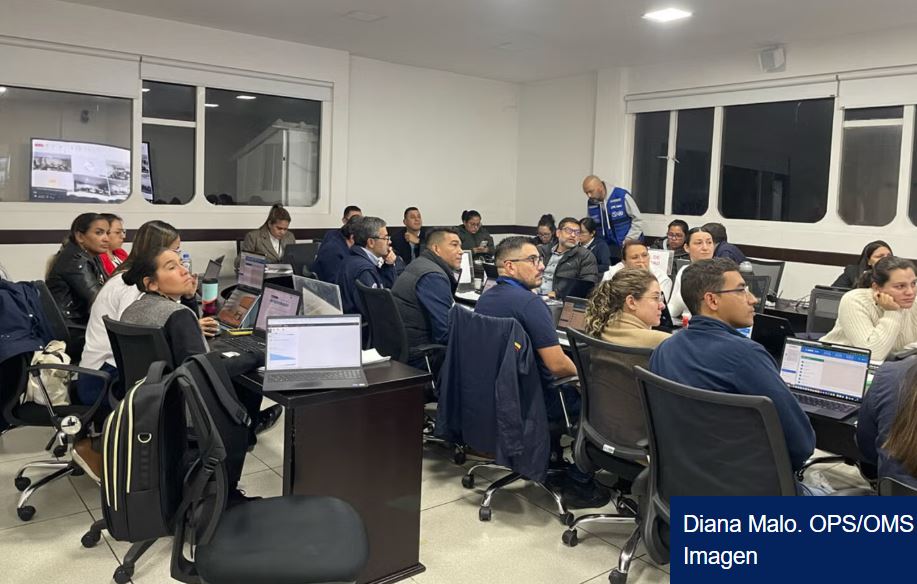
On 11 and 12 November 2024, a response simulation exercise for an avian influenza (AI) outbreak in humans was carried out in Colombia, as part of the XXXII International Course: Methods in Field Epidemiology and Public Health Surveillance, organised by the National Health Institute (INS) of Colombia with the support of the Pan American Health Organization/World Health Organization (PAHO/WHO). This exercise, aligned with the PIP Project (Pandemic Influenza Preparedness), reaffirms Colombia’s commitment to preparedness and response to global health emergencies.
The simulation exercise made it possible to assess the effectiveness of response protocols for an AI outbreak, strengthen staff training and improve inter-institutional coordination among the human health, animal health and environmental sectors. During the exercise, participants worked on practical scenarios designed to simulate the response to this emergency, based on PAHO/WHO’s emphasis on the need for periodic simulation drills as part of the global strategy for addressing public health crises.
The exercise brought together 130 participants, including 38 professionals from the Ministries of Health of Bolivia, Chile, Ecuador, Guatemala, Paraguay and Venezuela, as well as students and tutors from various regions of Colombia. The objectives of the activity were to strengthen competencies in risk management, epidemiological surveillance, laboratory capacity and communication — key elements for ensuring an effective response to health emergencies.

One of the most innovative aspects of the simulation was the use of the SIMEXaméricas platform of the Emergency Medical Teams (EMT) Initiative for the Americas, developed by PAHO/WHO to conduct large-scale simulations in a hybrid and virtual format. This tool, implemented for the first time during the COVID-19 pandemic, enabled real-time interaction among participants, facilitating the integration of tasks and messages in a virtual environment.
The implementation of SIMEXaméricas proved fundamental in optimising operational costs, broadening participation and enriching the exercise through the exchange of knowledge among participants. Furthermore, the platform enabled detailed monitoring and post-exercise evaluations to identify strengths and gaps in response capacities.
“Simulation exercises not only serve to prepare response teams, but also strengthen public confidence in institutions by demonstrating that strategic and coordinated planning exists for health emergencies,” the organisers concluded.
This simulation exercise underscores the importance of continuing to strengthen resilience against zoonotic threats and reaffirms the commitment of PAHO/WHO, the INS and participants to preparedness for future health emergencies, protecting public health and ensuring rapid and effective responses across the continent.