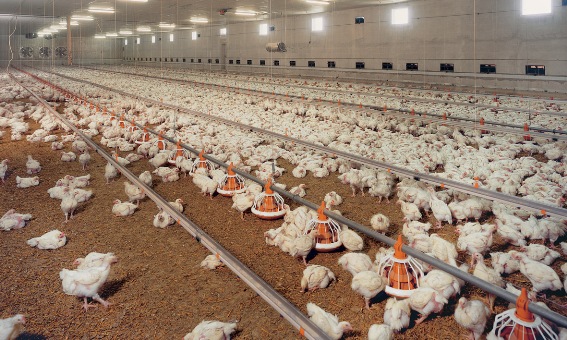

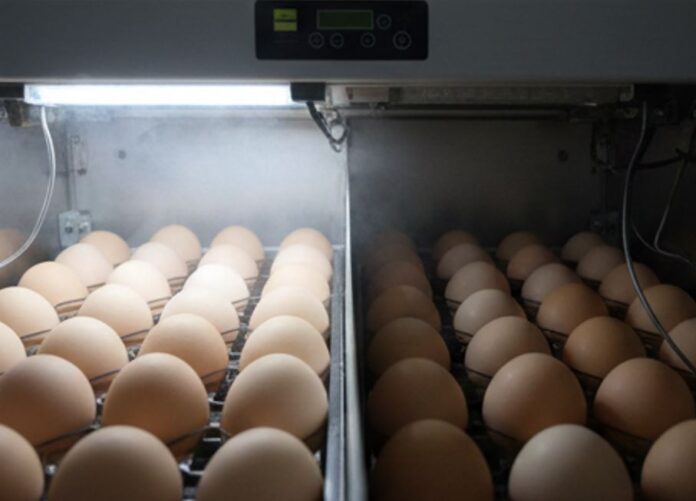
Chicks hatched from eggs incubated under light rather than darkness interacted more with their surroundings.
Exposing eggs to light during incubation causes chicks to engage more with environmental enrichments after hatching, according to a study. The researchers found that chicks incubated under light were more likely to use shelters in their environment than those that had developed without it.
Light during incubation and dark shelters post-hatch: new insights into chick behaviour and welfare
A study from the University of Edinburgh reveals that exposure to continuous white light during the final days of incubation modifies the behavioural patterns of laying chicks and modulates their response to environmental enrichment.
Why light matters before birth
In conventional commercial incubation, eggs are kept in complete darkness throughout the entire embryonic development period. However, under natural conditions, the hen periodically leaves the nest to feed, exposing the eggs to light-dark cycles. This difference, which for decades was considered irrelevant, is now being re-examined by science, with direct implications for poultry production and animal welfare.
A team of researchers from the Roslin Institute at the University of Edinburgh (United Kingdom), led by Louisa Kosin and Professor Simone Meddle, has recently published a study in the journal Poultry Science providing novel evidence on how light during incubation can shape the post-hatch behaviour of layer-line chicks, and how this prenatal programming interacts with environmental enrichment during rearing.
Experimental design: what was done?
The study used eggs from White Leghorn hens, one of the most representative genetic lines in egg production. The researchers designed a factorial scheme with two main factors:
| Factor | Treatments |
| Lighting during incubation | Continuous light (24L:0D): full-spectrum white light throughout the entire incubation period, in photoperiodic boxes with thermal compensation. Complete darkness (0L:24D): standard commercial incubation condition. |
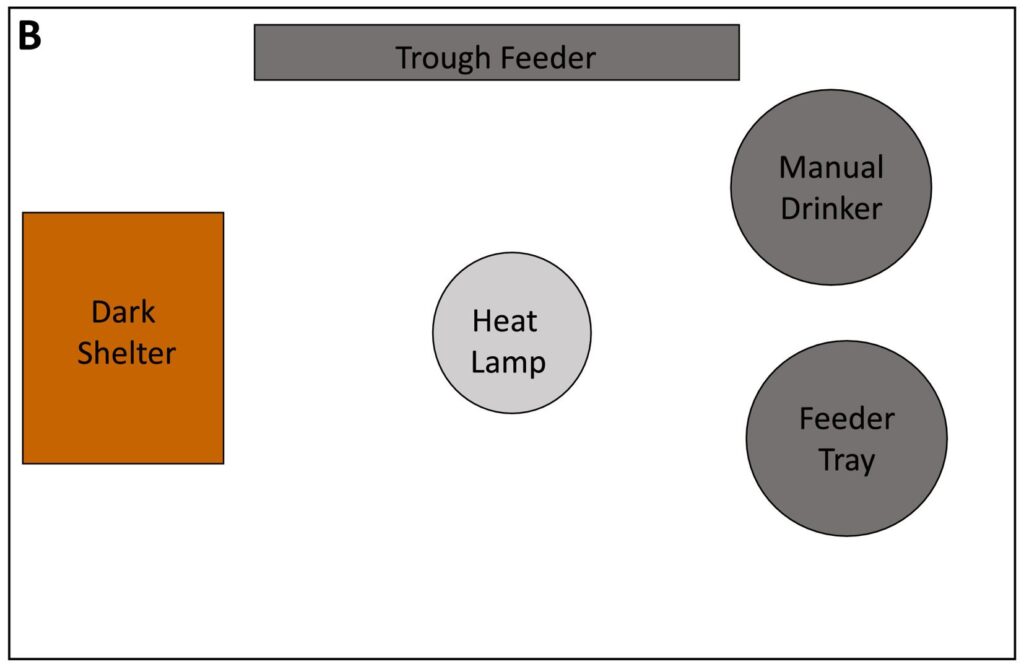
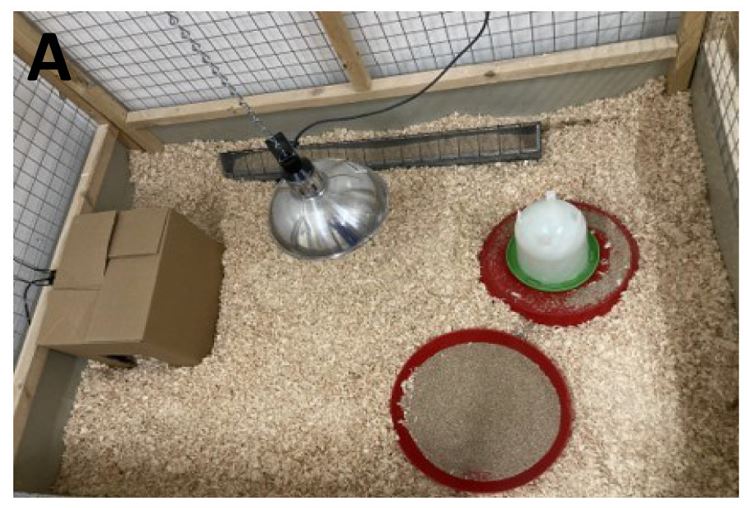
| Post-hatch enrichment | With dark shelter: pens equipped with a structure providing a shaded area where chicks can take refuge. Without shelter (standard): conventional pens without additional enrichment. |
The work was carried out with four cohorts of chicks, achieving eight replicates per treatment combination, which confers considerable statistical robustness for this type of research. The variables assessed included growth (body weight up to 4 weeks), behavioural time budgets (activity, feeding, resting, foraging) recorded via continuous video, and use of the dark shelter.
Key findings
1. Hatchability was not compromised
A reassuring finding for the industry: exposure to continuous light during incubation did not negatively affect hatch rates. This is consistent with the previous literature, which generally shows that lighting during incubation has neutral or slightly positive effects on hatchability, provided that temperature is adequately controlled.
2. Effects on body weight: subtle but sex-specific
At four weeks of age, an interesting sex-dependent trend was observed: female chicks incubated under light tended to be heavier than those incubated in darkness. Although this effect was statistically modest, it could have practical relevance in laying lines, where uniformity and early weight are key indicators of pullet rearing quality.
3. The headline finding: prenatal light modifies post-hatch behaviour
The most significant result of the study is the demonstration that light during incubation not only affects chicks in isolation, but also changes how chicks respond to the rearing environment. In other words, prenatal light acts as a behavioural “programmer”:
- In pens with dark shelter: chicks incubated under light showed lower general activity, less foraging and more resting time compared to those incubated in darkness. This suggests a greater capacity to adapt to an enriched environment.
- In standard pens (without shelter): the opposite occurred: chicks incubated under light were more active and foraged more than those incubated in darkness.
This interaction between incubation condition and rearing environment is a novel and highly significant finding. It indicates that modifying a single factor in isolation — lighting during incubation or environmental enrichment — is not sufficient; both interact and must be considered as an integrated system.
4. The dark shelter also has its own effects
Regardless of incubation condition, the presence of a dark shelter in the rearing pen reduced overall activity and foraging, while increasing resting time. Chicks actively used the shelter, and behavioural analysis within it showed that they used it predominantly for resting, suggesting that it serves as a comfort and security zone.
Why does in ovo light affect behaviour?
The biological mechanisms underlying these effects, although not the direct focus of this study, are well documented in the prior scientific literature. Light exposure during the late stages of embryonic development affects several fundamental processes:
- Brain lateralisation: light asymmetrically stimulates the right eye of the embryo (which receives greater stimulation due to its position), promoting hemispheric specialisation. Chicks with more lateralised brains show better multitasking ability, such as feeding while monitoring potential threats.
- Circadian rhythms: prenatal light exposure helps establish the embryo’s biological clocks, including melatonin synthesis. This facilitates synchronisation with light-dark cycles after hatching.
- Stress regulation: continuous darkness during incubation may itself act as a stressor. Several studies have shown that chicks incubated in darkness exhibit higher corticosterone levels and more intense fear responses.
- Muscle development: previous studies using monochromatic light (green and blue) have demonstrated that in ovo light stimulation can enhance the proliferation of muscle satellite cells, promoting early growth.
Practical implications for the industry
For hatcheries
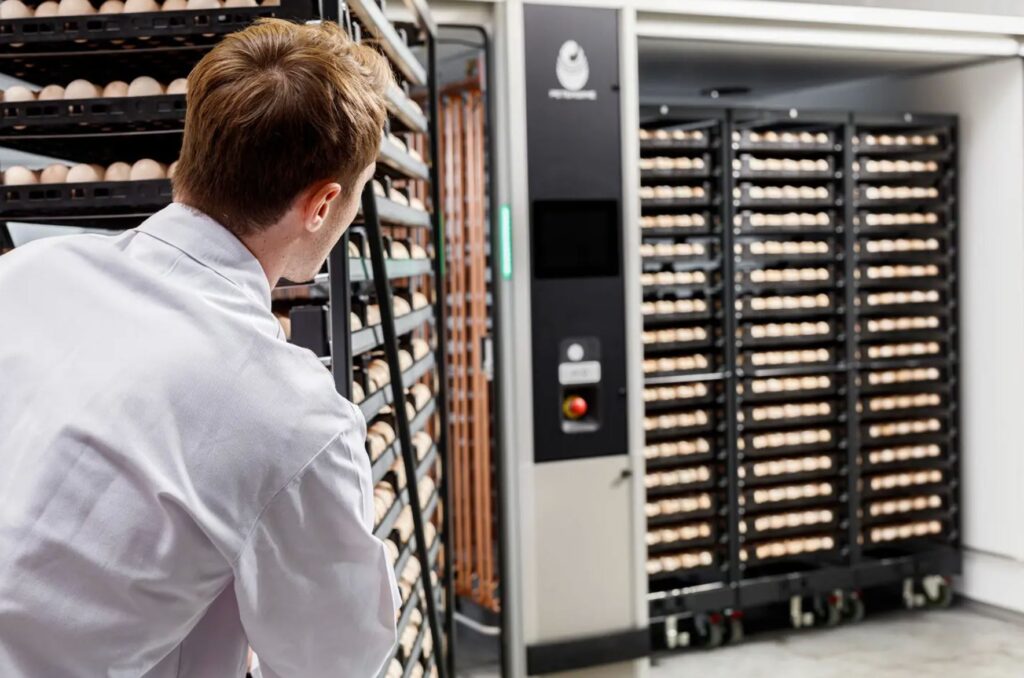
Incorporating in ovo lighting programmes in hatcheries does not require substantial investment. Current LED technology allows the installation of controlled-spectrum lighting with minimal energy consumption and without generating significant additional heat. The study by Kosin et al. used photoperiodic boxes with temperature compensation, which is a critical aspect: any plant-level implementation must ensure that the addition of light does not alter the thermal profile of the incubator.
For layer pullet rearing
The concept of the dark shelter as environmental enrichment opens a practical, low-cost avenue for improving welfare during the rearing phase. The reductions in activity and increases in resting time observed could translate into lower incidences of feather pecking, better feed utilisation and calmer chicks during handling. Furthermore, the fact that the response to the shelter depends on incubation condition underlines the importance of designing consistent management strategies from the hatchery to the farm.
In the context of in ovo sexing and on-farm hatching
This study takes on special relevance at a time when the laying industry is preparing for the widespread adoption of in ovo sexing technologies and on-farm hatching systems are being evaluated. In these systems, eggs are transferred to the rearing house around day 18 of incubation, where they hatch under continuous light with immediate access to feed and water. Understanding how different environmental factors interact during this critical period is essential for optimising transition protocols.
Key points for the professional
| ✔ Exposure to continuous white light during incubation does not reduce hatchability in White Leghorns. ✔ Female chicks incubated under light tend to achieve greater body weight at 4 weeks. ✔ Prenatal light modifies the way pullets respond to environmental enrichment, demonstrating a complex interaction between incubation and rearing environments. ✔ Dark shelters in rearing pens promote resting and reduce activity, which could improve welfare and reduce unwanted behaviours such as feather pecking. ✔ Incubation lighting and post-hatch enrichment strategies must be designed as an integrated system, not as isolated interventions. ✔ These findings are particularly relevant for the implementation of on-farm hatching systems in layer pullet rearing facilities. |
Limitations and future directions
The authors themselves note that further research is needed to determine whether these effects on early behaviour translate into long-term benefits during the rearing and laying phases. Furthermore, the study used continuous white light (24 hours), which does not replicate natural conditions or the intermittent lighting programmes that might be more appropriate for commercial application. It also remains to be explored whether these results are applicable to other laying genetic lines (such as Lohmann Brown or ISA Brown, which produce brown eggs) and to broiler chicks, where growth dynamics are very different.
Professor Meddle and her group at the Roslin Institute have been investigating the mechanisms of embryonic photoreception and their consequences for poultry welfare for several years, with funding from the UK BBSRC. Their upcoming work will focus on the neuronal mechanisms by which the embryo perceives and responds to light, including cell-type-specific transcriptomic analyses in the brain.
Conclusion
This study reinforces an idea that is gaining ground in modern poultry production: bird welfare begins before hatching. Environmental conditions during incubation are not merely a technical formality, but a window of opportunity to programme behavioural responses that facilitate the chick’s adaptation to its rearing environment.
The intelligent combination of in ovo lighting and post-hatch environmental enrichment is emerging as a comprehensive management tool, consistent with growing animal welfare demands and the sector’s productive efficiency objectives.
Source:
-. The effect of light during incubation and dark shelter enrichment on chick growth and behavior. Kosin, L., O’Hara, E., Johnston, A.R., Brown, H., Henderson, L.J. y Meddle, S.L. (2025). Poultry Science, Volume 105, Issue 1, 2026, 106144, ISSN 0032-5791, https://doi.org/10.1016/j.psj.2025.106144.
Further reading:
-. Effects of LED lighting during incubation on layer and broiler hatchability, chick quality, stress susceptibility and post-hatch growth. Jesse C. Huth, Gregory S. Archer. Poultry Science, Volume 94, Issue 12, 2015, Pages 3052-3058, ISSN 0032-5791, https://doi.org/10.3382/ps/pev298.
Do you want to stay one step ahead in poultry production?
Subscribe free to our eNewsletter and receive a weekly selection
of the best information to anticipate trends, stay up to date and develop as a poultry industry professional.
NeXusAvicultura: Vision, Insight, Quality and Context.