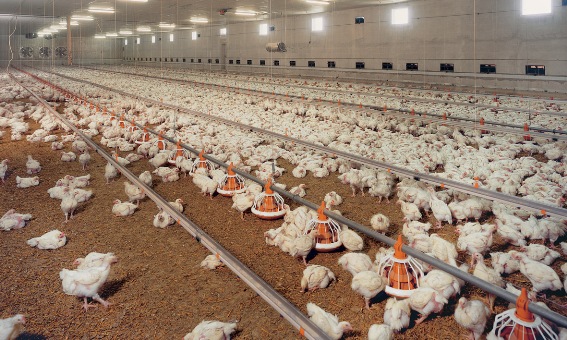

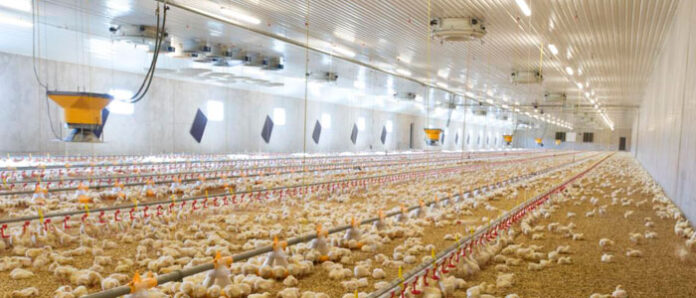
During summer, heat stress continues to negatively affect performance, welfare, and resource efficiency, particularly in areas characterised by high humidity and temperature.
Conventional evaporative cooling (EC) systems (commonly known as “cool cells” or “evaporative pads”) effectively reduce house temperatures, but are heavily dependent on water use and often increase relative humidity, which can impair the birds’ ability to dissipate body heat through respiration.
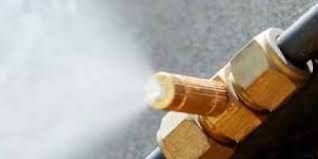
Fogging systems (FS) (foggers) offer an alternative cooling strategy by directly cooling the birds, using less water and minimising humidity increases within the house. However, limited data exist on their combined use with EC (“cool cells”) under commercial conditions.
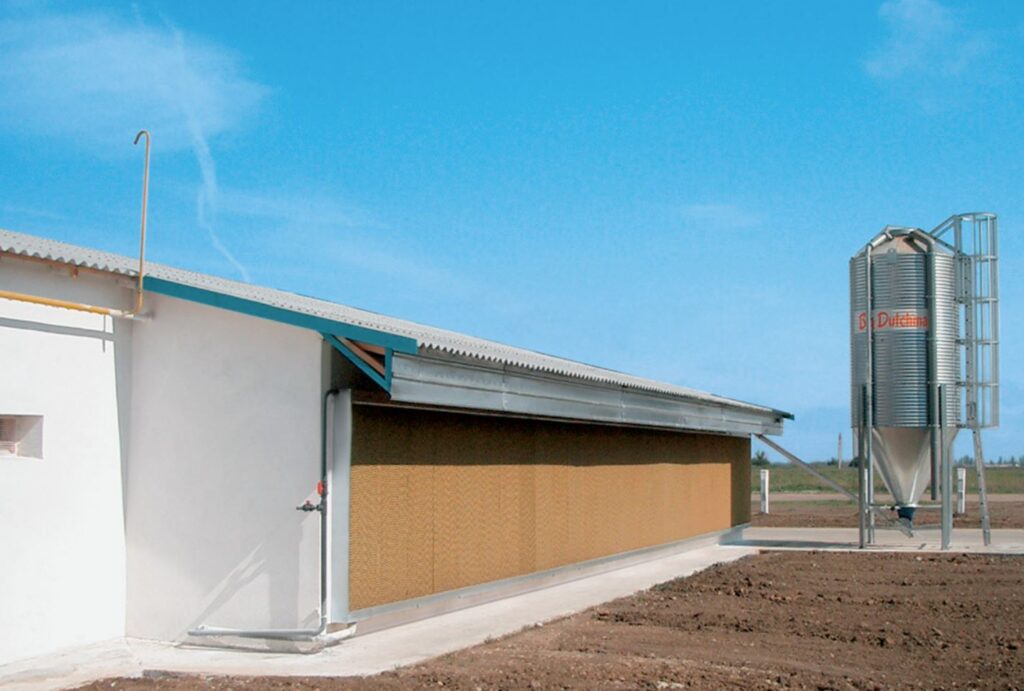
In order to address this topic, we evaluated and compared a combined evaporative cooling pad and fogging system (ECFS) against a conventional fogging-only system in two commercial broiler houses (13 × 122 m), over two summer flocks at Mississippi State University’s research farm, alternating cooling systems between houses to minimise house-effect bias.
The ECFS strategy (combining evaporative pads and foggers) initiated fogger operation from 21 days of age, and activation of the cool cells or evaporative pads was delayed until a temperature of 31 ºC, whereas in the house using cool cells only, activation occurred from 28 ºC. Environmental conditions, cooling water usage, bird performance, physiological responses, litter and air quality, and welfare indicators were monitored across both flocks.
combining cool cells and foggers resulted in significantly lower relative humidity
The results demonstrated that the ECFS treatment (combining cool cells and foggers) produced higher ambient temperatures but significantly lower relative humidity during daytime cooling hours compared with the EC system (cool cells only). This combination created more favourable conditions for evaporative heat loss in broiler flocks.
The combined evaporative cooling pad and fogging system (ECFS) strategy resulted in a reduction in cooling water usage of approximately 39% across two flocks, representing a saving of around 77.5 m3 per flock. Drinking water consumption did not differ between treatments, indicating that higher internal temperatures did not increase birds’ water intake.
The strategy of COMBINING evaporative pads and foggers (ECFS) resulted in a reduction in cooling water usage of approximately 39%
Drinking water consumption did not differ between treatments
Bird body temperature was effectively maintained under both cooling strategies, with no significant differences observed during the majority of the monitoring period. Broiler performance was not negatively affected by the cooling system, as body weight, feed conversion ratio, mortality, and processing yield were comparable between treatments.
Broilers in the combined evaporative cooling pad and fogging system (ECFS) treatment showed increased plumage soiling, caused by dust adhering to residual water following evaporation. This soiling was superficial and aesthetic in nature, rather than an indication of wet litter or poor house conditions. The birds were not continuously wet, as foggers were only activated when conditions were appropriate and the water evaporated rapidly.
Litter quality measures were also unaffected by treatment. Litter ammonia levels, composition, and moisture content, as well as total bacterial counts, Salmonella prevalence, and footpad scores, showed no significant differences, suggesting that the combined cooling system did not adversely affect litter quality.
Overall, these findings suggest that implementing systems that combine evaporative cooling pads with foggers at higher house temperatures can reduce relative humidity, resulting in lower cooling water usage while maintaining effective thermal regulation and bird welfare. This approach represents a promising alternative cooling strategy for commercial broiler production in warm and humid environments, with potential benefits for sustainability and resource conservation.
Jonathan W. Moon
Mississippi State University
Source:
-. “Effects of Combined Sprinkler and Cool Cell systems on Cooling Water Usage, Water and Feed Consumption Rates, Bird Performance and In-house Environment of Commercial Broiler Barns“. Feb. 2025. Jonathan W. Moon, 325 Wise Center Drive, Mississippi State University. Research funded by U.S. Poultry & Egg Association and the USPOULTRY Foundation. Project No. 740
Further reading:
-. Environmental comfort in poultry production
-. “Sprinkler Effects on Cooling Water Use, Litter Moisture, and Broiler House Environment“. Tom Tabler 1, Yi Liang 2 , and Jonathan Moon 3. 1University of Tennessee Extension and AgResearch, 2University of Arkansas Center of Excellence for Poultry Science/Department of Biological and Agricultural Engineering, and 3Mississippi State University, Department of Poultry Science, The Ohio State University, Extension Precision Livestock Farming, Winter Zoom Producer Series, 2024
Want to stay one step ahead in poultry production?
Subscribe free to our eNewsletter and receive a weekly selection
of the best information to anticipate trends, stay up to date, and develop as a poultry industry professional.
NeXusAvicultura: Vision, Insight, Quality and Context.