
Federico Castelló
They do it for our own good…
The recent debates in several European countries proposing a drastic increase in VAT and/or the creation of other “sustainability” taxes on meat products have found their academic justification in a new study “Environmental impacts from European food consumption can be reduced with carbon pricing or a value-added tax reform” published in January 2026 in Nature Food.
This report, publicised by outlets such as “The Guardian” — which have been advocating for the cessation or reduction of animal protein consumption for years — argues that removing reduced VAT rates on meat and applying the standard rate is the “simplest” policy tool for mitigating climate change, calculating that this price increase could reduce the environmental damage of European diets by between 3.48% and 5.7% by forcing a decline in consumption. The authors argue that current prices do not reflect the “hidden costs” of emissions and propose this fiscal approach as a quick first step, given the difficulty of implementing more complex carbon pricing mechanisms.
However, beneath this technical rhetoric of “internalising costs” and ecological responsibility, this measure conceals a dangerous bureaucratic oversimplification that penalises the middle and lower classes without guaranteeing the promised environmental impact.
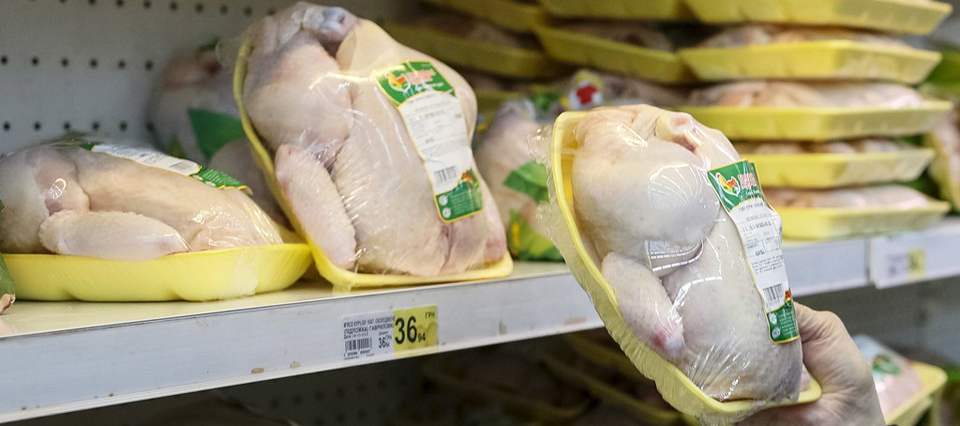
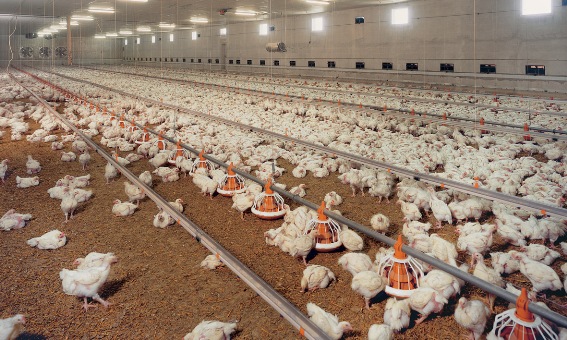
Much like the fable of the boiling frog — which tells the story of a frog placed in a pot of warm water that is gradually heated, never killing it outright, while the frog, comfortable and unaware, fails to react or jump out, and simply accepts its fate until it perishes — as the Prime Minister of Canada aptly stated this week at the Davos Forum in a speech that will go down in history: “If you’re not at the table, you’re on the menu“. If, as a sector, we do not proactively fight back — with science, data, and real costs — against the legislative nonsense that certain movements seek to impose on our policymakers, we will end up being consumed (by taxes) by them. For all these reasons, the poultry sector, along with other livestock sectors, must jump out of the pot now and bite the hand that feeds us (360° communications), countering with solid arguments those who are steadily and insidiously raising our taxes — always, of course, “for our own good”, meaning for the good of the consumer, who will surely be delighted that a handful of self-appointed experts have decided that the meat they buy should be more expensive, so that we can all be more sustainable, more “cool”, and more “trendy”.
Let us not be misled: this article — a trial balloon extolling the virtues of raising taxes on meat — is ammunition that certain “illuminati” will present to our fence-sitting MEPs in order to push through such nonsense. Below I summarise some of the reasons why this proposal is not a genuine sustainability policy, but rather a strategy for greater tax revenue dressed up under the all-purpose banner of sustainability.
1. A punishment for lower-income households (fiscal regressivity)
The central argument against raising VAT on meat is its profoundly unjust nature. Total food expenditure accounts for a far greater proportion of total spending in low-income households than in high-income ones.
By artificially increasing the cost of nutritionally high-quality proteins on the basis of theoretical models, the measure does not deter the wealthy consumer — who will absorb the extra cost without changing their habits — but rather prices vulnerable families out of the market. Attempting to turn meat into a luxury good creates a class divide and nutritional inequality, pushing lower-income consumers towards cheaper ultra-processed foods that are, paradoxically, less healthy.
2. The illusion of sustainability and “carbon leakage”
The premise that “higher prices equal lower emissions” ignores the reality of global markets — more relevant than ever given the rapid geopolitical changes and the Mercosur agreement. European livestock farming is subject to the world’s strictest animal welfare and environmental control standards.
Fiscally penalising efficient local production risks triggering consumption leakage: if European production becomes unviable due to falling domestic demand or rising costs, the market could open up (even further) to imports from third countries with lax regulations and far larger carbon footprints due to transport. Destroying the local livestock sector only to end up importing meat from regions with lower environmental efficiency is a strategic mistake.
3. The myth of elastic demand
The proponents of the tax, relying on the mathematical models in the Nature Food study, assume a demand elasticity that rarely holds in a linear fashion for staple products. People need to eat. Raising taxes does not automatically translate into an idyllic shift towards plant-based diets; it more often simply results in a reduction of the budget available for other basic needs (energy, housing, education) or in the purchase of lower-quality food.
4. Social engineering and paternalism
There is a worrying ethical undercurrent in the idea that the State should use the tax system to “correct” citizens’ behaviour “for their own good”. This paternalistic vision assumes that individuals are incapable of making informed decisions about their diet and need to be guided through financial penalties.
The function of taxation should be to fund public services and help ensure that all citizens have equal opportunities — not to shape private morality or consumption habits through financial coercion. And, I apologise if anyone takes offence at such bluntness, but raising VAT from a reduced or intermediate rate to the highest rate (for example, from 10% to 21% in Spain) would be yet another act of financial coercion — one of many with which States are already suffocating consumers.
5. The goal must be Innovation (and the poultry sector is very good at this) rather than prohibition.
A measure that, if adopted, would fail to achieve its stated objective (improving the planet’s sustainability) while successfully achieving its unstated one (swelling the coffers of EU member states). As my good friend Francisco Javier González argued in his article advocating “Let us get on with our work“, regulators must provide the legal framework for producing healthy food at competitive prices. It is high time to stop branding poultry and the rest of the livestock sector as unsustainable.
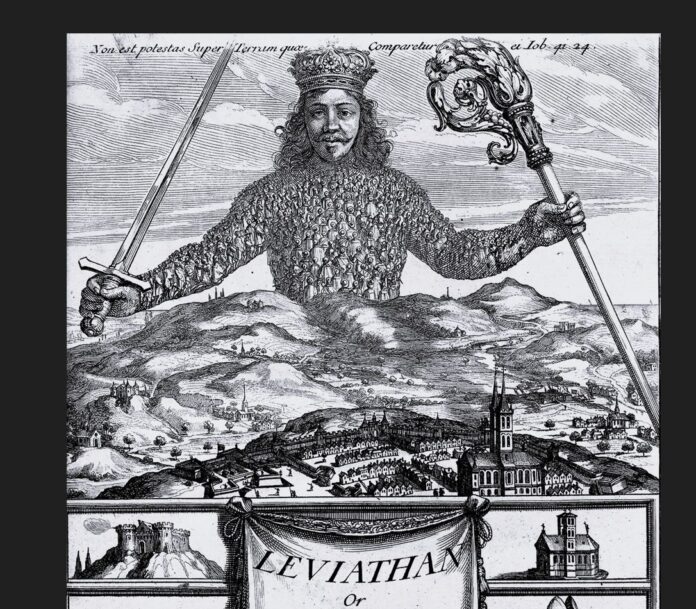
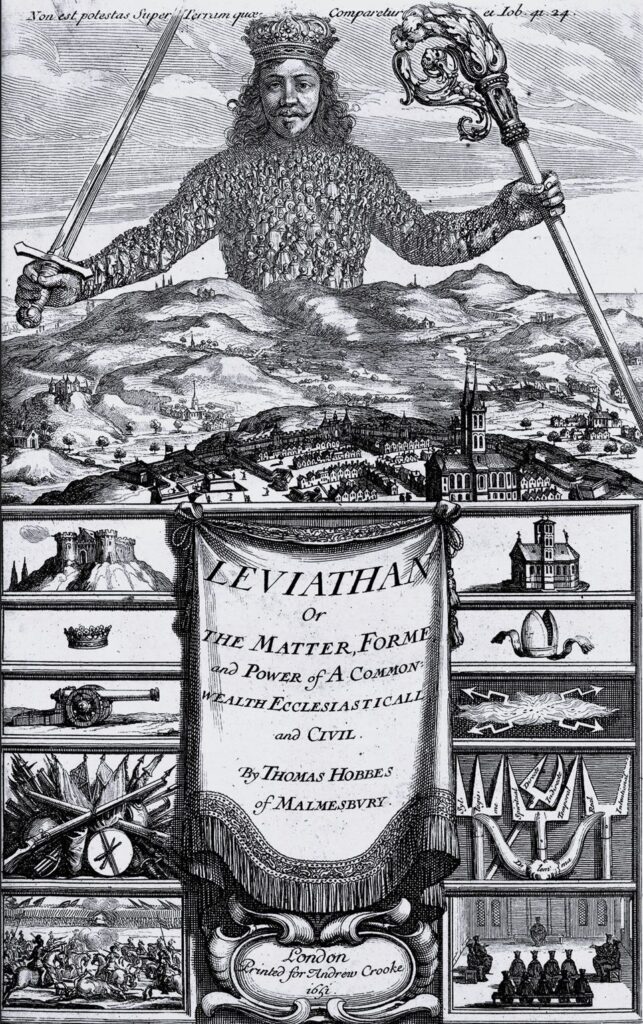
What is truly unsustainable are the Leviathan States we have created. Taxing meat is an easy solution to a difficult problem. Such a measure — making meat more expensive — would serve only to allow our politicians to “look as if they are acting”, to appear to be making decisions in the noble pursuit of “climate action” and to boost tax revenues, while transferring the real cost to farmers and working families. Let us stop being naive.
True sustainability does not lie in impoverishing the population’s diet or in dismantling Europe’s primary sector. It lies in efficiency, technology, the cross-cutting application of artificial intelligence throughout the entire production cycle, genetic improvement, and above all, in the sacrosanct respect for consumer freedom of choice.
Any policy that claims to save the planet by making food unaffordable for the majority is neither progressive nor green; it is simply unjust.
Federico Castelló
Founder and CEO of NeXusAvicultura.com
Sources cited:
-. Plinke, C., Sureth, M. & Kalkuhl, M. (2026). Environmental impacts from European food consumption can be reduced with carbon pricing or a value-added tax reform. Nature Food. https://www.nature.com/articles/s43016-025-01284-y
-. “Meat tax” could have significant impact on environmental footprint, study finds. The Guardian, 20 January 2026
For further reading:
-. Sustainability in poultry farming
Want to stay one step ahead in poultry farming?
Subscribe free to our eNewsletter and receive a weekly selection
of the best information to anticipate trends, stay up to date, and grow as a poultry industry professional.
NeXusAvicultura: Vision, Insight, Quality and Context.