

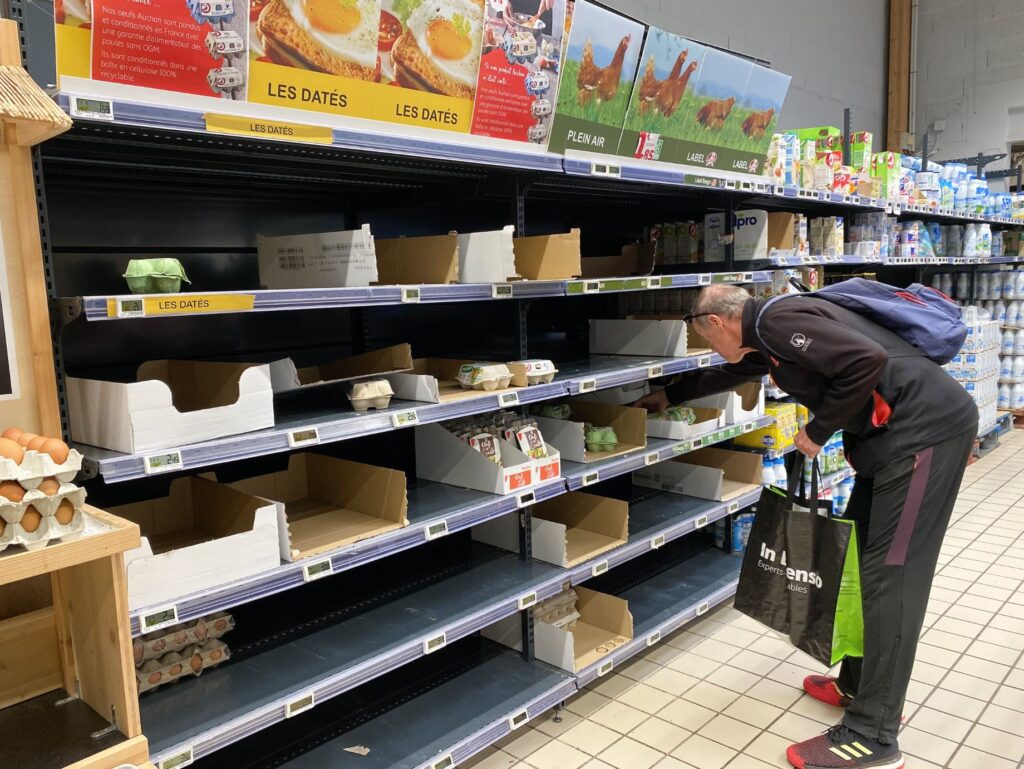
The “penury” or insufficient eggs on French supermarket shelves: a mismatch between record consumption, bureaucratic and legal obstacles, logistical failures, and relentless demand.
France is going through a critical situation in the poultry sector that has begun to manifest itself clearly on supermarket shelves: sporadic egg shortages. While demand for this staple food continues to grow, domestic production has stalled due to a combination of regulatory, social, and logistical factors that prevent the country from efficiently meeting its own needs.
1. The rise in consumption: the most democratic protein of all
Egg consumption in France has reached record levels, averaging 235 eggs per person per year. Between 2023 and 2024, demand increased by nearly 5% (approximately 300 million additional units per year), while domestic production fell by 0.4%.
This phenomenon is explained primarily by purchasing power: the egg has established itself, as in Switzerland, Spain, the United Kingdom, and virtually all European countries, as the cheapest and most accessible source of protein in the face of rising meat prices. This high demand, combined with seasonal factors such as the year-end holidays and the tradition of the “galette des rois”, has led many consumers to engage in “panic buying” or stockpiling, further aggravating shortages in stores.
2. Causes of the shortage: a problem compounded by French hyper-bureaucracy
Authorities and experts agree that the egg shortage is not due to external factors, but rather to structural internal obstacles:
- 2.1 – Administrative complexity: Agriculture Minister Annie Genevard herself has criticised the fact that France has made a complicated situation even more complicated and stated in an interview on channel BMF on Monday 12 January 2026 that setting up a hen house in France is today as complex as building a sensitive industrial facility. Regulations are extremely restrictive and the country tends towards “over-transposition” of European laws, burdening poultry farmers beyond what the EU actually requires.
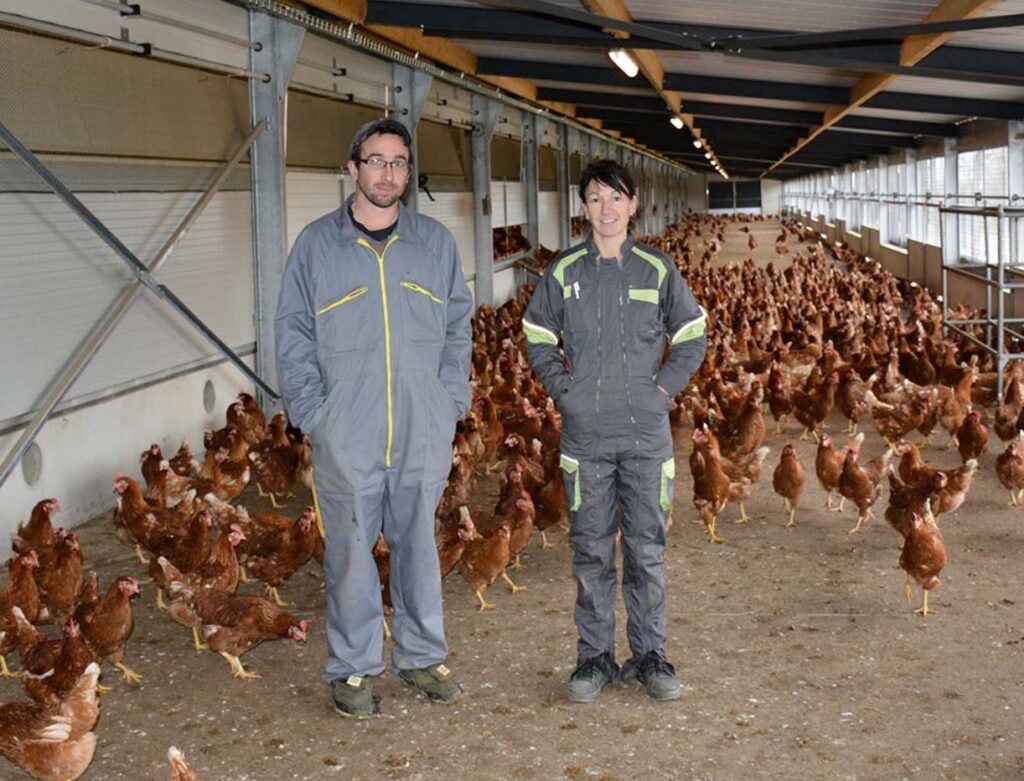
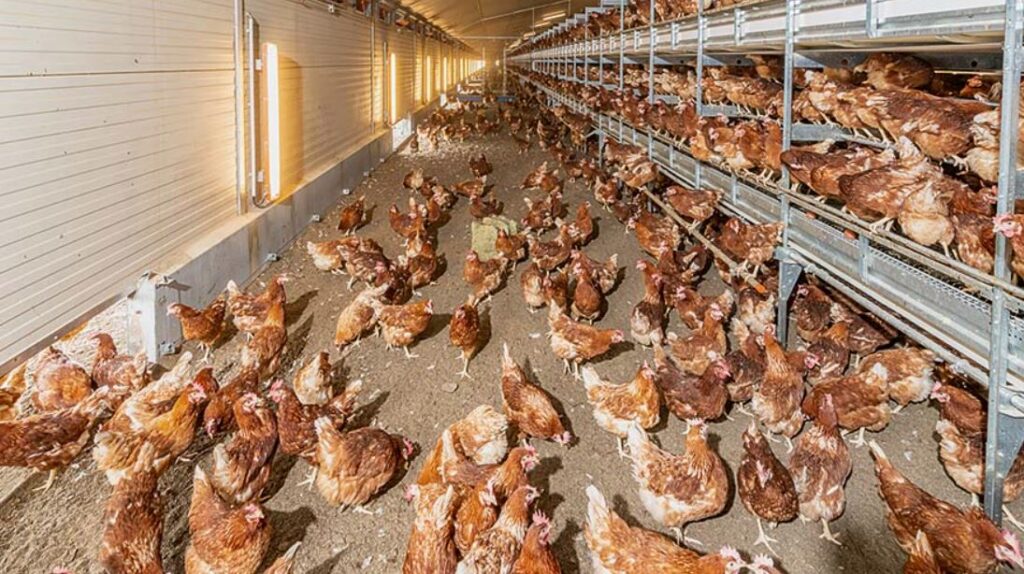
2.2- The transition to cage-free systems: France has set a legal target of achieving 90% of hens raised in alternative cage-free systems. Although this measure is well regarded from an animal welfare perspective, a poultry farmer requires an average of two years to adapt their facilities, creating a gap in supply while demand continues to rise.
2.3 – Social and legal opposition: There is strong local resistance to the construction of new agricultural buildings. Many citizens oppose such projects out of ignorance or because they consider them places of animal mistreatment. There have even been legal cases, such as in Dijon, where the construction of a large hen house was refused on the grounds of an “unfavourable climatic future”.
3. Eggs under snow, storms, and soaring demand
At the start of 2026, tensions have been heightened by the coincidence of the traditional increase in egg consumption during the holiday and seasonal cake period, and the unexpected snowfall that temporarily disrupted shelf restocking,” stated the French egg interprofessional body — CNPO — in a press release on Monday.
The immediate consequence is a supply strain that is affecting supermarkets unevenly. Although Yves-Marie Beaudet, president of the egg interprofessional body (CNPO), asserts that efforts are being made to avoid importing eggs that do not meet French standards, the gap between supply and demand is undeniable.
The phenomenon observed “across all retail chains” in the first fortnight of 2026 is due to “logistical difficulties caused first by snow and then by the storm across the entire northwest”, confirmed the Federation of Trade and Distribution (FCD), the trade organisation representing large-scale retail.
However, there is no cause for alarm: sales have increased by 6% compared to 2024, and no one is talking about a complete supply breakdown. Panic buying could empty shelves even faster. For its part, the egg sector has implemented measures to respond to growing demand, such as extending the productive life of laying hens, although this measure has both advantages and drawbacks.
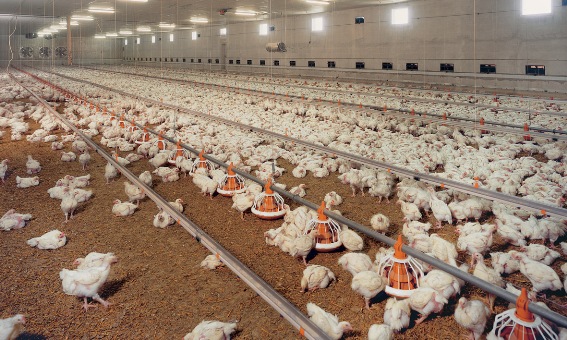
Finally, its most important and repeated request is the need to ease regulations to facilitate the construction of new laying hen houses, with the aim of having 300 new facilities in place by 2030, in the same way that its “sister” sector — French broiler poultry production — is working to build 400 new broiler fattening units (the poultry meat most in short supply in France).
4. Towards a solution: the plan for 2030
To reverse the situation, the sector and the government have launched several measures:
- Regulatory simplification: The so-called “Plomb-Menonville law“ seeks to remove administrative barriers to facilitate the installation of livestock buildings.
- Expansion plan: The French laying poultry sector’s objective is to build 300 new hen houses by 2030 to house an additional one million laying hens.
- Recovery timeline: The situation is expected to begin normalising in June 2026, reaching a full balance between supply and demand by the end of that same year.
Further reading:
-. Pénurie d’œufs: “On n’en produit pas assez (…) parce que c’est trop compliqué d’installer des bâtiments d’élevage”, déplore la ministre de l’Agriculture, Annie Genevard
-. Poultry farming in France
-. Cage-free systems
Want to stay one step ahead in poultry farming?
Subscribe for free to our eNewsletter and receive a weekly selection
of the best information to anticipate trends, stay up to date, and grow as a poultry industry professional.
NeXusAvicultura: Vision, Insight, Quality and Context.