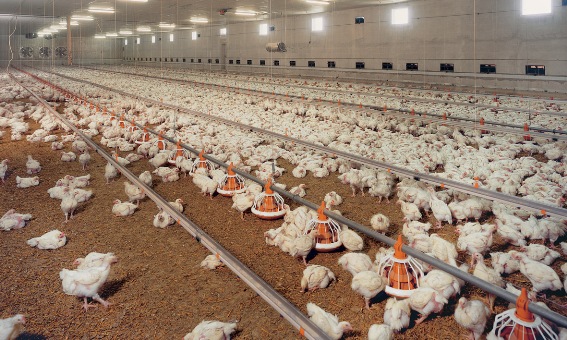

On 12 May 2026, the European Union (EU) officially notified the removal of Brazil from the list of third countries authorised to export products of animal origin for human consumption. The measure, which will take effect on 3 September 2026, has been received as a “slap in the face” by the Brazilian government, particularly as it came just twelve days after the provisional entry into force of the trade agreement between the EU and Mercosur.
The core of the dispute: antimicrobials and public health
NeXusAvicultura Editorial Team, 14 May 2026 – The decision, approved unanimously by the European Commission’s Standing Committee on Plants, Animals, Food and Feed, is based on non-compliance with rules on the use of antimicrobial agents. Brussels maintains that Brazil has not provided sufficient guarantees that its products are free from antibiotics used for animal growth promotion or productivity enhancement — practices prohibited in the EU under its “One Health” policy to combat antimicrobial resistance.
Christophe Hansen, European Commissioner for Agriculture, defended the firmness of the measure, noting that European farmers comply with strict standards and that it is legitimate to demand the same of imports. Products subject to the ban include poultry meat, eggs, beef, horse meat, honey, aquaculture products and casings.
Health alerts: the tip of the iceberg?
Data from the Rapid Alert System for Food and Feed (RASFF) add further pressure on the South American bloc. Between January and April 2026, 83 health notifications were recorded for Mercosur products. Brazil accounted for 33 of these alerts, notably 15 cases of Salmonella in poultry meat and the presence of poultry DNA in fishmeal.
European farming organisations warn that these figures may be only the “tip of the iceberg”, given that the EU physically inspects just 0.0082% of imported products.
Brazil’s reaction: surprise and accusations of protectionism
The government of Luiz Inácio Lula da Silva received the news with surprise and defended the robustness of its sanitary system, which has been exporting to Europe for 40 years. The Brazilian Animal Protein Association (ABPA) insisted that the country fully complies with traceability protocols and antimicrobial regulations.
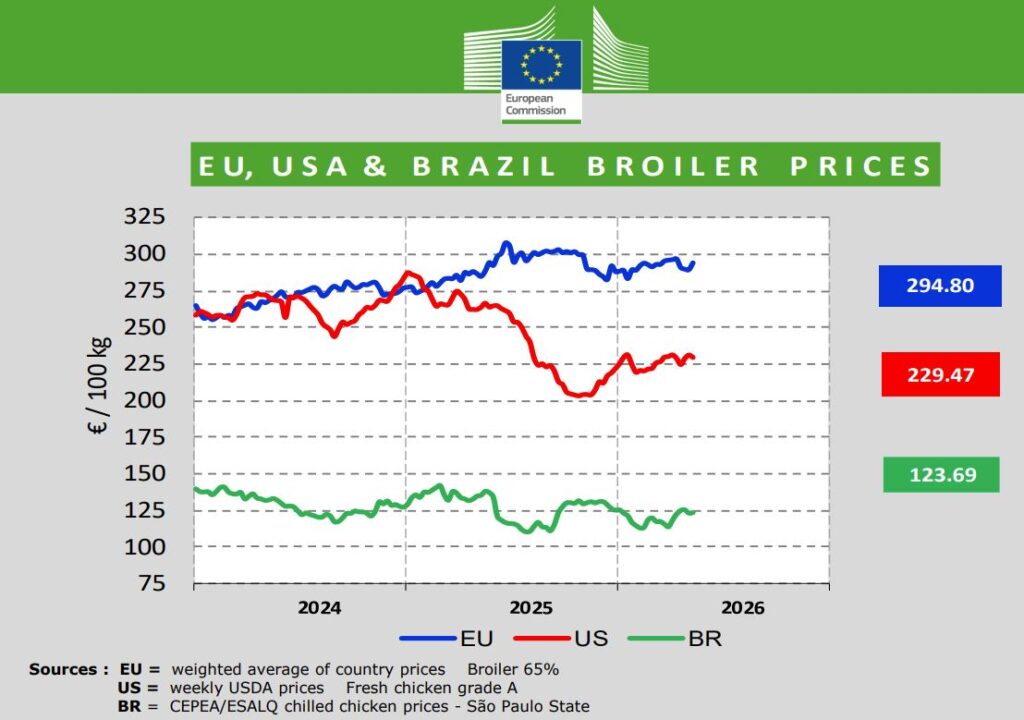
Industry analysts, such as Fernando Iglesias, describe the measure as “technical protectionism”. According to this view, the selective exclusion of Brazil — while Argentina, Uruguay and Paraguay remain on the list — is intended to placate the discontent of European farmers in the face of competition from the bloc’s largest agricultural power, particularly in poultry meat, where Brazil is the world leader and “unsettles” the European market.
Economic and diplomatic impact
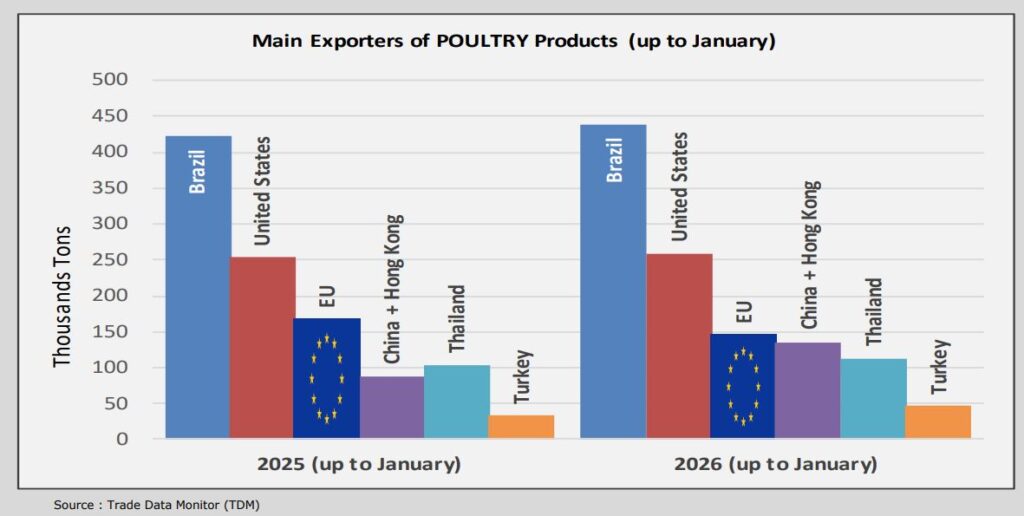
Although exports will continue normally until September, the potential economic impact on Brazil would be very significant. Between 2023 and 2024, Brazilian poultry meat exports to the EU (between 200,000 and 230,000 tonnes) accounted for 4.2% of its total global exports. In 2025 they fell due to EU restrictions following avian influenza outbreaks in Brazil in 2025, but had already recovered substantially in the first months of 2026.
Regarding beef, in 2025 Brazil exported more than 370,000 tonnes of beef to the EU, worth 1.8 billion dollars. However, experts point out that the European market represents only 3.25% of Brazil’s meat exports, compared to the 42% absorbed by China, which remains its primary trading partner.
Brazil’s Ambassador to the EU, Pedro Miguel da Costa e Silva, began meetings on 13 May to present technical explanations. The European Commission has left the door open to resuming trade as soon as Brazil demonstrates compliance with the requirements demanded throughout the entire animal life cycle.
To find out more:
-. EU-MERCOSUR Agreement
-. EU-MERCOSUR Agreement impact on Poultry. Report by AVEC-COGAG. 20250624
-. The “safeguard clause“: false protection, mere window dressing
Want to stay one step ahead in poultry?
Subscribe free to our eNewsletter and receive a weekly selection
of the best information to anticipate trends, stay up to date and develop as a poultry industry professional.
NeXusAvicultura: Vision, Insight, Quality and Context.