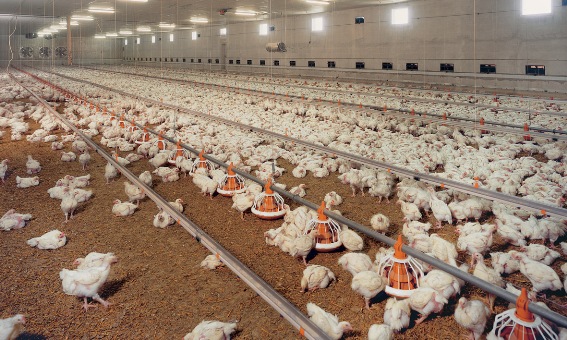

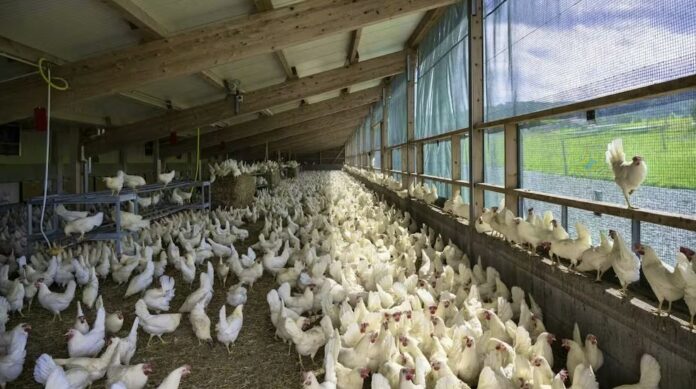
The Helvetic Columbus’s Egg: chronicle of a foretold death in Swiss poultry farming
1. Introduction: the silence of the Swiss countryside
9 January 2026. The Swiss winter, ordinarily characterised by the precision of its railway timetables and the whiteness of its peaks, has dawned with an anomaly that disturbs cantonal peace: empty egg shelves in supermarket aisles. Any Swiss consumer who visited a branch of the Migros supermarket chain in Zurich or a Coop near Lake Geneva over the recent Christmas period — or today — is very likely to encounter empty shelves where egg cartons bearing the white cross on a red background once stood. And if they are fortunate enough to find any stock, they will notice something the Swiss dislike: the origin stamp on those eggs does not carry the white cross on a red background, but rather a Dutch, French, or German origin code.
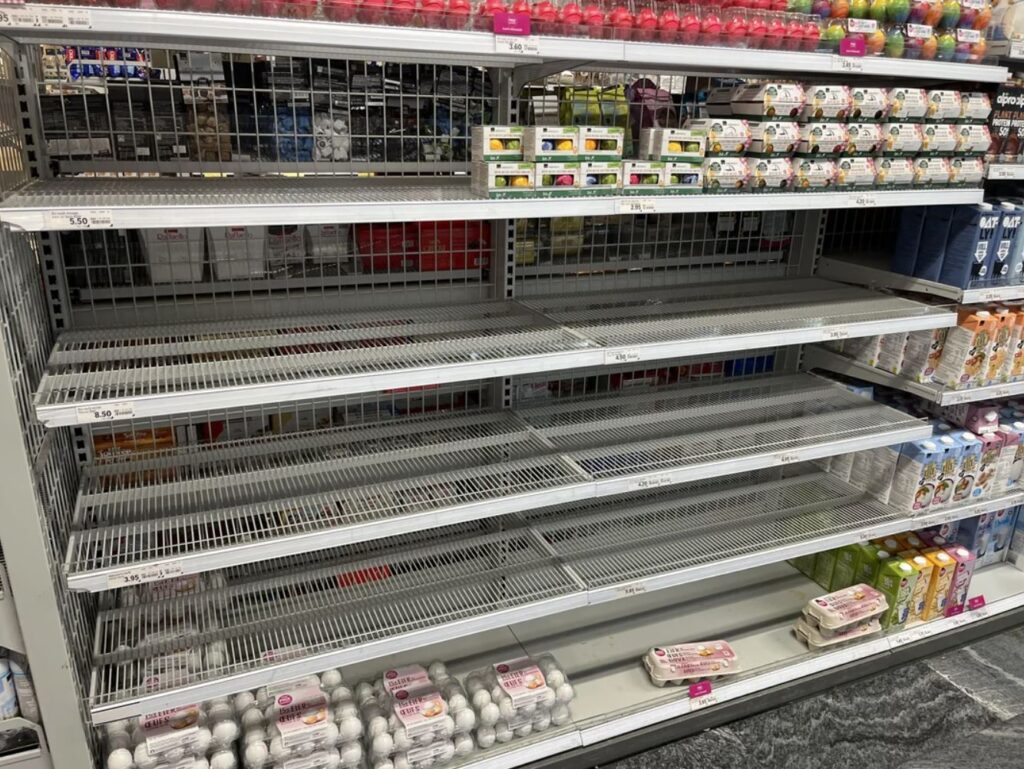
The current egg shortage in Switzerland is no accident. It is not a twist of fate, nor, as some lazy headlines suggest, solely the fault of a migratory virus. It is the mathematical, predictable, and inevitable result of three decades of hyper-regulation, agrarian romanticism, and a “welfare” policy that has forgotten the basic biology of the hen Gallus gallus domesticus in favour of political aesthetics.
Switzerland is proud of having built the most perfect poultry system in the world. So perfect that many well-intentioned Western “welfarists” were clamouring to make it mandatory in their own countries.
So perfect, so ethical, and so regulated, that it has ceased to be functional.
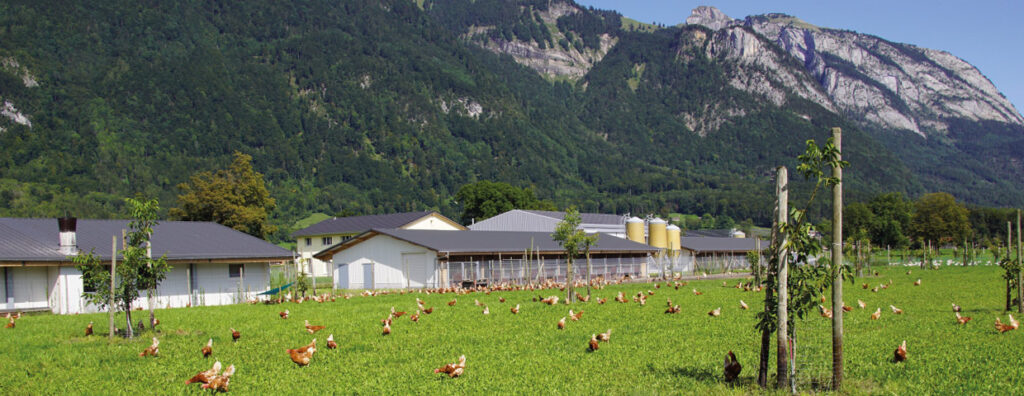
In this report for NeXusAvicultura.com, we will dissect the corpse of Swiss self-sufficiency. We will analyse how the first country in the world to ban cages — in 1992, long before anyone else — now finds itself importing eggs from the very systems its own citizens banned by referendum. We will address the paradox of a market that demands eggs from happy hens grazing on alpine meadows, while land-use planning regulations prevent the construction of the henhouses those hens would need to exist, and a viral pandemic forces them to be confined indoors.

The figures are stubborn and have no feelings: despite a titanic effort to increase domestic production by 4.2% (46 million eggs) during 2025, warehouses closed the year empty. Demand has devoured supply. The Swiss consumer — that rational being who votes green but buys cheap — has pushed per capita consumption to a historic record of 197.7 eggs per year. And faced with the inability of local production — strangled by bureaucracy — to satisfy this protein hunger, the floodgates of imports have been thrown wide open: 64 million eggs imported in the first six weeks of 2025 alone.
Prepare for a journey through the anatomy of a foretold collapse, where animal production collides with politics and where promising a “Disneyland for hens” has ended up meaning that, as always, the uninformed consumer is left to foot the bill — either through exorbitant prices, even for the comfortably deep Swiss pockets, or simply through the impossibility of finding eggs on supermarket shelves.
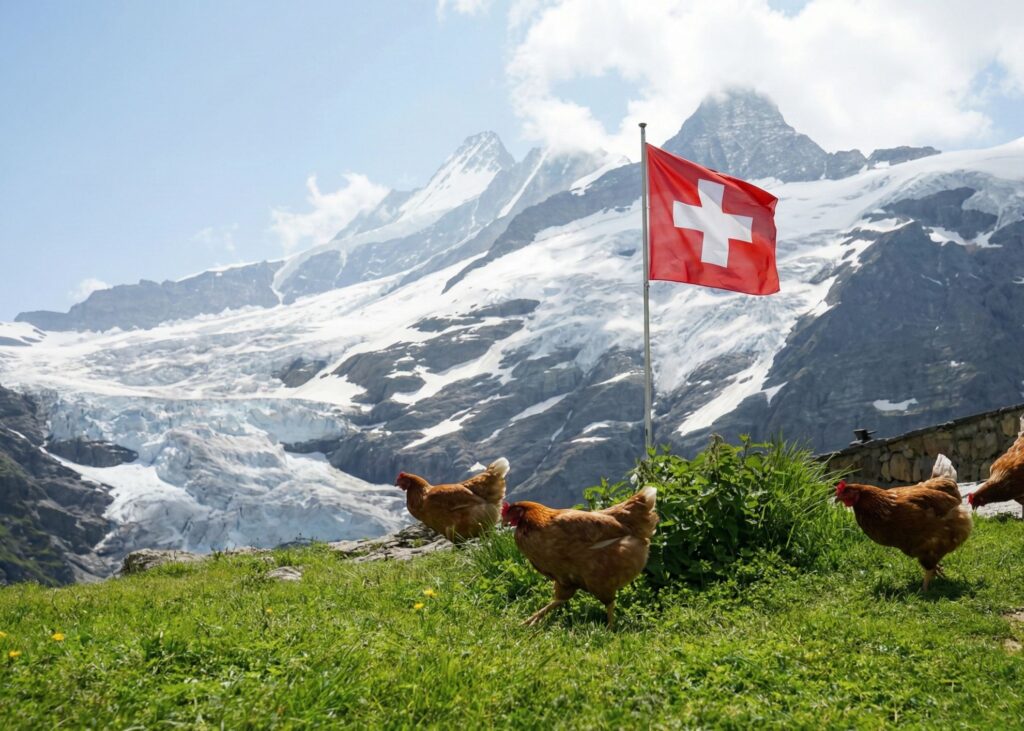
2. Physiology of scarcity: when biology collides with the market
To understand why eggs are in short supply, we must first understand the biological machine that produces them. I have always been fascinated by the capacity of the modern laying hen. She is an elite metabolic athlete, genetically designed to convert feed into high-quality protein with an efficiency that would put a Tesla engine to shame. But every engine has its limits, and Switzerland has decided to ignore the warning lights on the dashboard.
2.1 The myth of “on-demand” production
Daniel Würgler, president of GalloSuisse, has said it time and again: egg production cannot be increased “at the press of a button”. A hen is not a 3D printer. From the moment a farmer decides to expand production to when the first egg emerges from the cloaca of a new bird, years pass. But even in the short term, the biological cycle is inescapable.
A pullet takes around 20 weeks to begin laying. If demand surges at Christmas, we cannot “speed up” the hens. They lay, with luck, one egg every 24–26 hours. Nature does not understand market fluctuations at Christmas, Easter, or public holidays, nor the marketing campaigns of “Veganuary” which, ironically, drive egg consumption upward as an alternative to meat.
2.2 Pressure on the hen: extended laying cycles and shell quality
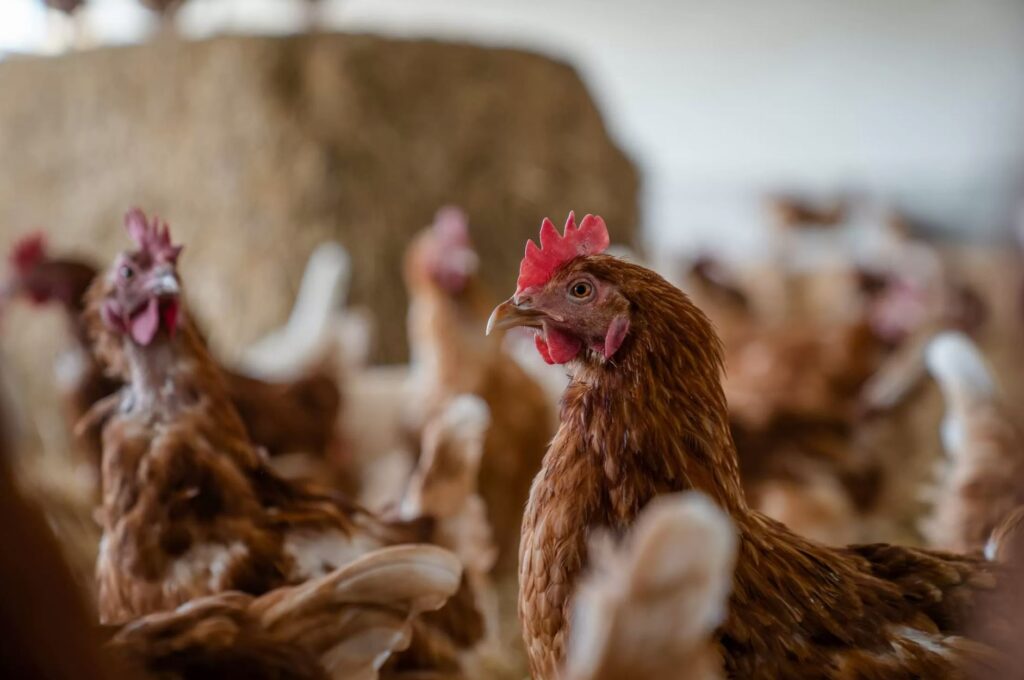
In response to the shortage, the industry’s answer has been what we technically call “verlängerten Umtrieben” (extended laying cycles). Traditionally, a commercial hen is culled (or sent to the soup pot, to be precise) after at least 12–14 months of lay, when shell quality begins to decline and the moulting pause is imminent. Due to the lack of replacement pullets and the desperate need for eggs, producers are keeping hens until 70, 80, or even 90 weeks of age.
From my perspective, with today’s majority of laying genetics, this is a practice that should be the exception rather than the norm. Extending the productive life of the laying hen carries the following risks:
- Osteoporosis and sternal fractures: The hen mobilises calcium from her own bones to form the shell. The longer the cycle, the greater the skeletal decalcification. In aviary systems (cage-free), where birds must fly and jump, the risk of keel bone (sternum) fractures increases exponentially with age. We are asking osteoporotic grandmothers to do parkour to feed us.
- Egg quality: As the hen ages, eggs become larger, but the amount of calcium available for the shell remains constant or decreases. The result: thinner shells, more breakages in the transport chain, and consequently more food waste before the eggs ever reach the supermarket.
- Immunosenescence: Older birds are more susceptible to pathogens. In a winter marked by the threat of Avian Influenza and Newcastle disease, maintaining geriatric flocks is an epidemiological risk we accept out of economic necessity.
2.3 The consumption paradox
The Swiss appetite for eggs is voracious. Consumption rose 4.7% in a single year. Why?
- Inflationary refuge: Despite the rise in egg prices, meat has risen even more. The egg remains the most democratic animal protein.
- Misunderstood flexitarianism: As meat consumption declines (the meat self-sufficiency rate fell to 79.6% in 2024), consumers seek satiety from eggs.
- Industrial processing: The food industry and the catering sector demand vast quantities of liquid or powdered egg. This is where “Swissness” tends to die quietly. While consumers buy Swiss-packaged eggs, the mayonnaise in their sandwich or the egg in their pasta usually speaks a different language. However, political and marketing pressure to use Swiss eggs in processed products as well has further drained the fresh egg market.
| Biological/Market Indicator | 2025/2026 Situation | Veterinary/Economic Impact |
| Age of laying hens | > 80 weeks (extended) | Higher risk of fractures, reduced immunity. |
| Shell quality | Declining | Increase in “second-grade eggs” (industrial) vs. table eggs. |
| Per capita consumption | 197.7 units | Unsustainable pressure on the national flock. |
| Self-sufficiency rate | 62.5% (historic low) | Critical dependence on foreign poultry health status. |
3. The bureaucratic labyrinth: why you cannot build a henhouse in Switzerland
If you think raising hens is difficult, try obtaining planning permission to build them a house. The main reason production has been unable to keep pace with demand is not biological — it is legal. The Raumplanungsgesetz (Spatial Planning Act, RPG) has become the most effective contraceptive in Swiss agriculture.
3.1 The fiction of the fully self-sufficient farm
The fundamental principle of Swiss agricultural law is land dependency (Bodenabhängigkeit). The idea — romantic and nineteenth-century in nature — is that livestock must be fed on what the farm produces and must fertilise it with their manure. In modern professional poultry farming, this is a fiction. No commercial poultry farm in Switzerland can produce 100% of its own wheat, maize, and soya. We depend on feed mills and raw materials, many of which are imported.
Nevertheless, cantonal planning authorities use this principle to refuse building permits. If a poultry farmer wishes to expand his shed by 2,000 additional hens, he is required to demonstrate that he has the corresponding usable agricultural area (LN) available to spread the extra nitrogen and phosphorus. But here lies the trap:
- If you buy too much feed, you are classified as “industrial” and redirected to an industrial zone.
- In an industrial zone, land costs 500 CHF/m² (537 euros/m²) and you cannot keep free-range hens (a requirement for selling to Migros/Coop).
- In an agricultural zone, you are not allowed to build because you are “insufficiently dependent on the land”. This is the Helvetic mousetrap. The farmer is caught in a legal limbo where expansion is impossible.
3.2 The case of the mobile henhouse: jurisprudence of the absurd
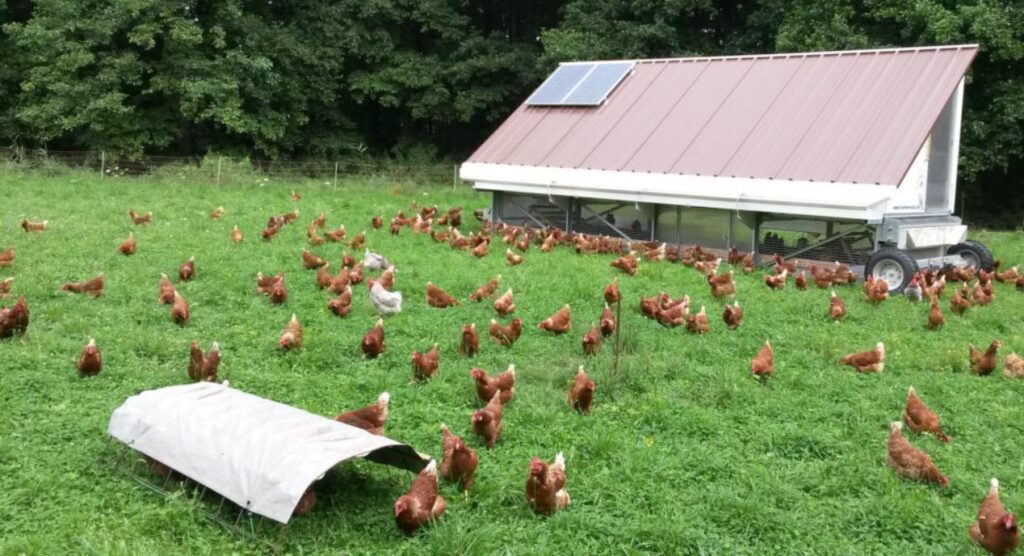
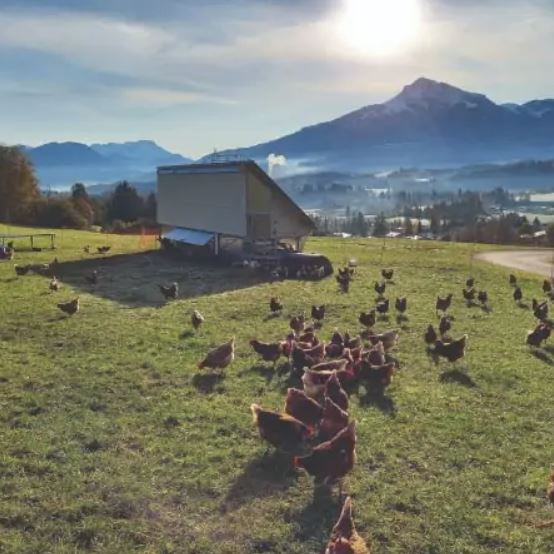
nnnnInnovation is also penalised. Mobile hen houses (small wheeled units that move around the meadow) are the dream of animal welfare: they prevent the build-up of parasites in the soil and give access to fresh grass. However, the Federal Court has set a precedent: a mobile hen house is, in legal terms, a building. And not only that: it requires a building permit for each location where it is parked.
Absurdist case law at its finest. If a poultry farmer or the veterinarian advising them decides, with every reason in the world, to move the birds for health reasons (to break the coccidiosis cycle, for example), an official will demand a topographic plan and a visual impact survey to move a trailer 50 metres to the left. The result is that many poultry farmers abandon the idea of innovating.
3.3 Administrative lead times of 3 to 6 years to set up a small farm
nnnnDaniel Würgler (GalloSuisse) estimates that a project takes 3 to 6 years to materialise. In the fast-moving consumer market, 6 years is an eternity. When demand rose during the pandemic, farmers applied for permits. Those permits are only now being approved, or remain stuck in courts due to opposition from neighbours who want “free-range eggs” but do not want to smell the countryside. This regulatory latency guarantees that supply will always be two steps behind demand.
nnnnnnnn
4. The betrayal of subsidies: the BTS case and financial hypocrisy
nnnnSwiss agriculture lives connected to an artificial respirator called “Direct Payments”. The system is designed to direct farmer behaviour through incentives. But in 2024, the government decided to cut off the oxygen supply in the middle of a marathon.
nnnn4.1 The BTS cut (Besonders Tierfreundliche Stallhaltung)
nnnnFor decades, the Swiss government said: “Build aviaries with natural light and winter gardens, and we will pay you the BTS bonus“. Poultry farmers went millions of francs into debt to build these cathedrals of poultry welfare. In 2024, the Federal Council decided to cut these payments. The bureaucratic logic was perverse: “Since almost everyone is doing it already, it no longer needs to be incentivised”.
nnnnFor an accountant in Bern, it is a saving. For the poultry farmer, it is a betrayal of a long-term implicit contract. The depreciation of a hen house is calculated over 20 years. Changing the rules of the game mid-match has destroyed investor confidence. Who in their right mind would invest 2 million francs today in a new poultry shed knowing that the subsidy that makes the project viable could disappear overnight by administrative decree?
nnnnGalloSuisse has had to implore retailers (Coop, Migros) to offset this loss by raising producer prices. But in a negotiation between a farmer and a retail oligopoly, the outcome is predictable: the farmer loses.
nnnn4.2 The “Nutrient Reduction Pathway” or, in plain terms, the starvation diet
nnnnIn parallel, the “Nutrient Reduction Pathway” (Absenkpfad Nährstoffe) was implemented. The objective is to reduce nitrogen and phosphorus losses by 20% by 2030.
nnnnThis obliges farmers to formulate feeds with lower crude protein. From a veterinary standpoint, this is playing with fire. The hen needs amino acids (methionine, lysine) to form feathers and eggs. If we reduce protein below a critical threshold to “save the environment”, the hen enters metabolic stress. And what does a stressed, protein-deficient hen do? It starts pecking the feathers of its flock-mates to obtain the keratin (protein) from blood and feathers.
nnnnThe result of armchair environmentalism is cannibalism in the hen house. And to combat cannibalism, we need more space and management capacity, which the RPG prohibits from being built. The vicious circle is perfect.
nnnnnnnn
5. The Ghost of 1992: lessons from being the first country in the world to ban cages
nnnnSwitzerland banned battery cages in 1992, 20 years ahead of the European Union (2012). It was a moment of national pride. But when analysing the current shortage situation, we must ask ourselves whether “animal goodism” and a certain naivety have ultimately created a monster of unachievable standards.
nnnn5.1 “Welfare Leakage”
nnnnBy banning cages and subsequently imposing very low stocking densities (a maximum of 18,000 birds per farm, whereas in the EU economies of scale mean that farms with tens of thousands of laying hens are commonplace), the cost of Swiss eggs was brutally inflated.
nnnnWhen local production collapses as it has now, Switzerland imports eggs. From where? From the Netherlands, France, Germany or Italy. Although these countries comply with EU regulations (no conventional cages, but enriched cages or very high-density aviaries are permitted), their standards are lower than those of Switzerland.
nnnnThe Swiss consumer, when buying cheap imported eggs (or consuming them in pasta and biscuits), is financing production systems that they voted to ban in their own country. The Alpine nation has outsourced “cruelty” (by the Swiss definition) in order to keep its citizens’ consciences clean and its shelves stocked.
nnnn5.2 The cost of being extremely pioneering: immature technologies
nnnnThe country of 26 cantons was the first in the world to adopt aviaries on a large scale. This meant that Swiss farmers paid the “learning tax”. The early systems were difficult to manage, with high rates of floor eggs and problems with red mite (Dermanyssus gallinae). Today, those systems need renewal, but capital is unavailable due to regulatory uncertainty and BTS cuts.
nnnnnnnn
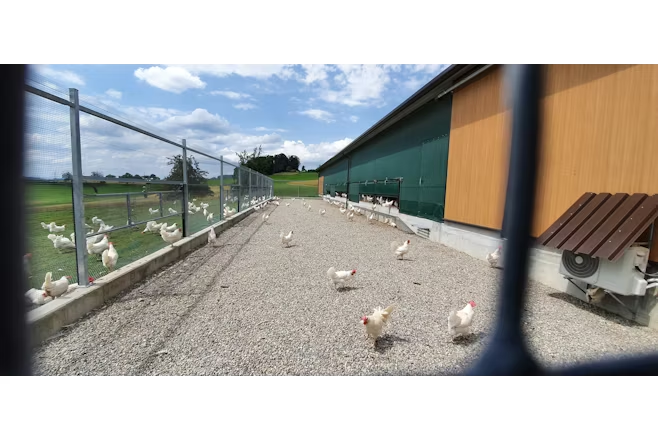
6. Winter 2025/2026: the perfect viral storm
nnnnAs if the bureaucracy were not enough, nature has decided to intervene. The winter of 2025/2026 will be remembered across Europe in the annals of avian health as the winter of confinement.
nnnn6.1 Avian Influenza (H5N1): the invisible enemy
nnnnThe Highly Pathogenic Avian Influenza (HPAI) virus has become endemic in European wildlife. Since November 2025, the Federal Food Safety and Veterinary Office (BLV) has decreed drastic measures. The whole of Switzerland is now an “observation area”. The most impactful measure is mandatory confinement: birds must remain in the “outdoor climate area” (covered winter gardens) and may not access open pastures unless protected by nets.
nnnn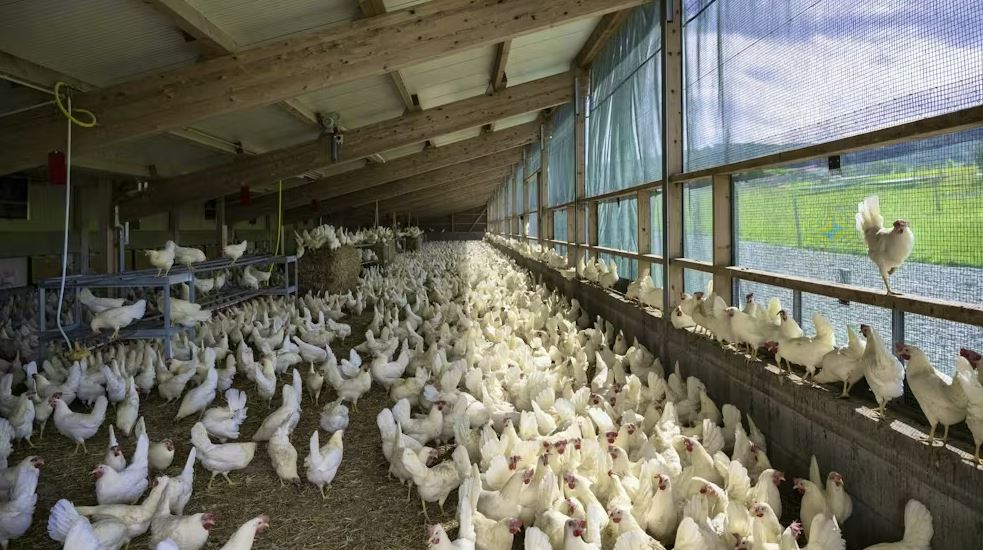
From an epidemiological standpoint, this is necessary. Contact with a single dropping from an infected wild goose can wipe out a flock of 12,000 laying hens.
nnnnBut from a welfare and marketing perspective, it is a disaster.
nnnn6.2 The necessary fraud: “Freiland” labels without any field
nnnnHere we enter the realm of Kafkaesque surrealism. We have millions of hens sold as “Freiland” (free-range) that have not set foot on grass for months.
nnnnTo avoid logistical collapse (reprinting millions of packages), the authorities are allowing eggs to continue to be sold as “free-range”, provided consumers are informed.
nnnn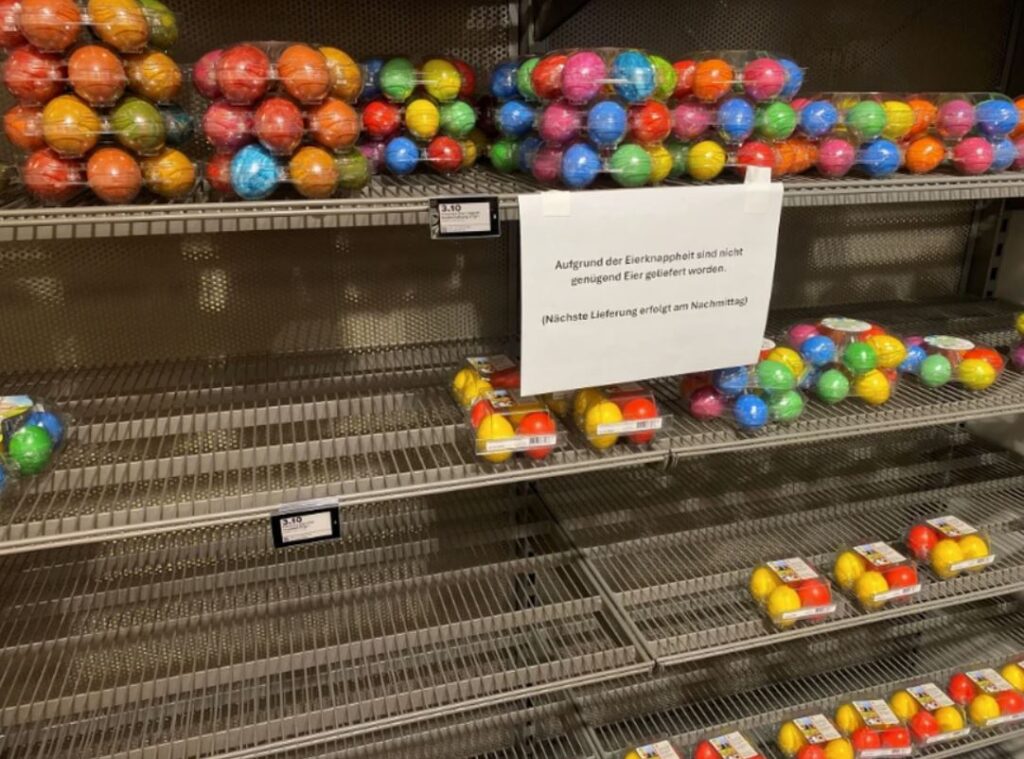
Supermarkets have put up apologetic signs: “Due to avian flu, our hens are being kept safe indoors”.
nnnnIt is a white lie. The consumer pays the premium price for “free-range” for a product that is, functionally, “barn with winter garden”. How long will consumer patience last before they feel cheated? And what happens to the natural behaviour of hens when their access to outdoor runs — to which they had already grown accustomed — is suddenly taken away?
nnnnBirds used to going outside, suddenly confined, become frustrated. Stress increases aggression. We return to the risk of feather pecking. Of course “patches” can be applied, such as prescribing “toys” (alfalfa bales, pecking stones) to keep them occupied, but the best environmental enrichment is pasture, and it is prohibited by viral decree.
nnnnnnnn
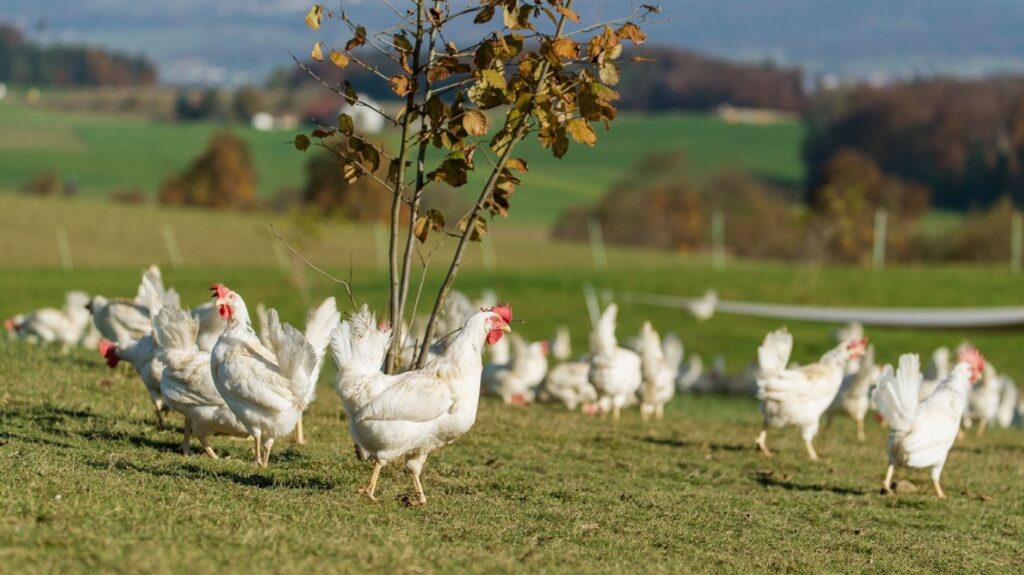
7. Technological solutions and their shadows: In-Ovo Sexing
nnnnAmid the crisis, the Swiss industry has implemented an ethical revolution: the end of the culling of male chicks. Until recently, the brothers of laying hens were culled at hatch by maceration or gassing. Since 1 January 2026 this practice has been completely banned in Switzerland, with the country’s two hatcheries having completed the transition by the end of 2025.
nnnn7.1 The Orbem/Vencomatic technology
nnnnThe solution adopted is the stuff of science fiction: magnetic resonance imaging (MRI) and artificial intelligence to sex the embryo inside the egg before it can feel pain. The Swiss hatcheries (Animalco, Prodavi) have installed these multi-million-franc machines.
nnnn- n
- The Cost: This adds approximately 3.00 CHF (3.22 Euros) to the cost of each pullet, which translates into cents per egg. In an inflationary market, it is yet another additional cost that makes the Swiss egg less competitive against imported eggs (where these practices, although debated, are not always mandatory or as costly).
- The organic alternative: The organic sector has chosen to raise the “brother cockerels” (Hahn im Glück). From a veterinary efficiency standpoint, this is a thermodynamic absurdity. These cockerels are of laying genetics; they convert feed into muscle very inefficiently. We spend natural resources (soya, cereals) to produce low-yield, high-cost meat, solely to satisfy a purist ethic. It is a “waste” of resources dressed up as animal welfare. n
nnnn
8. Economic analysis: the duopoly and the margin
nnnnWe cannot talk about scarcity without talking about money. The Swiss egg market is a funnel. At the top, hundreds of producers. At the bottom, millions of consumers. In the middle, a bottleneck dominated by two giants: Migros and Coop.
nnnn8.1 The dictatorship of the margin
nnnnWhile the consumer pays almost 9.6 CHF (10.31 Euros) per dozen organic eggs, the producer receives crumbs that barely cover rising costs (energy, feed, amortisation of in-ovo sexing technology).
nnnnRetailers use imported eggs as a pressure valve and negotiating tool. “If you don’t accept our price, we’ll bring more from Holland.” The government’s expansion of import quotas weakens the negotiating position of local poultry farmers. Instead of allowing scarcity to push up the producer price (the law of supply and demand), the market is flooded with foreign product to keep prices “stable” and shelves full (although now they are failing even at that).
nnnn8.2 Comparative prices: the shame gap
nnnn| Product (half dozen eggs) | Origin | Price (CHF) | Comment |
| Bio Knospe | Switzerland | 4.70 (5.05 euros) | The “Rolls Royce”, unaffordable for many. |
| Freiland (Free Range) | Switzerland | 3.95 – 4.50 (4.53 euros) | The middle-class standard. Critical shortage. |
| Bodenhaltung (Barn) | Import (EU) | ~2.00 – 2.50 (2.42 euros) | The “strikebreaker”. Fills the gap. |
The price difference is not just about quality; it is the cost of Swiss bureaucracy.
nnnnnnnn
9. Conclusion: a country to learn from… so as not to repeat its mistakes.
nnnnIn the current geopolitical context my diagnosis is grim for Switzerland but positive for other countries. The disastrous self-destruction of the Swiss poultry sector, and of Swiss food sovereignty, should prompt us to react and learn from its mistakes so as not to repeat them.
The country suffers from an autoimmune disease in which, although the measures were approved in referendums with broad popular support, these misguided political decisions end up attacking its own productive organs.
- n
- Paralysing over-regulation: An environment has been created in which it is legally almost impossible to build the facilities needed to meet the ethical standards we demand. The RPG must be reformed to recognise that animal welfare requires infrastructure, and that infrastructure takes up space. nnnn
- Consumer and State hypocrisy: We want happy hens, but we are unwilling to pay the real cost or to see hen houses near our homes. The State cuts subsidies (BTS) just as it demands greater investment (Nährstoffpfad, in-ovo sexing). nnnn
- Sanitary vulnerability: Dependence on imports and the inability to renew infrastructure makes us vulnerable to disease. Old farms or “Heidi’s little cottages” are harder to clean and disinfect. n
The Prognosis: If there is no radical change in building permit policy and a restoration of financial confidence (stable subsidies), the “shortage” of 2026 — which had already been occurring in previous years — will not be a one-off event, but the new normal. Switzerland will become a “Poultry Disneyland”: a few model farms to show tourists, while the actual population feeds on eggs produced on foreign poultry farms, hidden in the ingredient lists of pasta and mayonnaise.
nnnnGiven all this context, the professional Swiss poultry farmer has already made a decision, the most realistic one possible: No investment.
Not until Bern decides whether it wants farmers or landscape gardeners.
In the meantime, if you come across a genuinely Swiss egg, savour it. It is an endangered species, suffocated by the deadly embrace of those who claim to love it — and please, do not replicate Swiss radicalism unless you want to shoot yourself in the foot.
Federico Castelló
Founder of NeXusAvicultura
nnnn
Annex: Timeline and Data
nnnnA. Timeline of Regulatory Collapse
nnnn- n
- 1992: Ban on cages. Beginning of the golden age of animal welfare. nnnn
- 2014: RPG 1 (Planning Act). The construction blockade begins. nnnn
- 2024: BTS subsidy cuts. The government breaks its financial promise. nnnn
- 2025: Mandatory in-ovo sexing. Costs +3 CHF/pullet. nnnn
- Nov 2025: H5N1 forces confinement. De facto end of “free range”. nnnn
- Jan 2026: National shortage. Expansion of import quotas. Total ban on chick culling enters into force from 1 January 2026. n
B. Production vs. Import Statistics (January 2026)
nnnn| Category | Figure | |
| Domestic Production (2025) | + 4.2% (insufficient) | |
| Imports (Jan-Feb 2025) | 64 million eggs | |
| Demand Increase | + 4.7% per capita | |
| Self-sufficiency | < 62% |
Sources:
-. Stiftung Aviforum zur Förderung der Schweizer
-. Eiernachfrage erreicht 2024 einen neuen Höchststand
-. AgrarBericht.ch
-. Poultry farming in Europe (NeXusAvicultura)
-. In-ovo sexing
-. Cage-free systems
nnnn
Do you want to stay one step ahead in poultry farming?
Subscribe free to our eNewsletter and receive a weekly selection
of the best information to anticipate trends, stay up to date and grow as a poultry industry professional.
NeXusAvicultura: Vision, Insight, Quality and Context.