
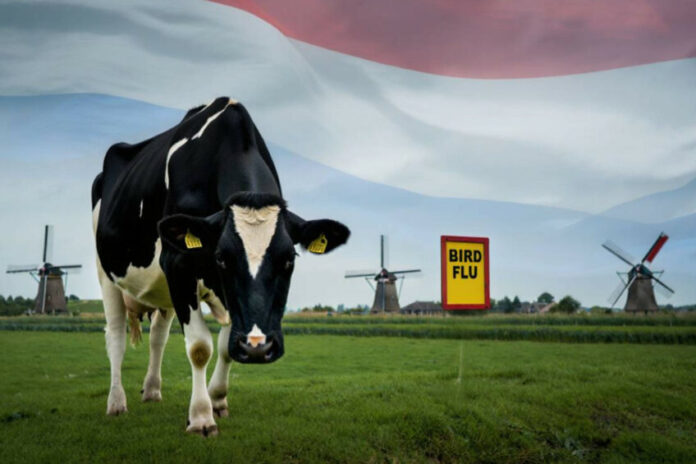
The authorities of the Netherlands confirmed the first case in Europe of a dairy cow with H5N1 avian influenza antibodies following an investigation into the death of an infected cat on the same farm, although analyses show that no active virus or viral circulation is currently present on the farm. The affected animal displayed symptoms of mastitis and reduced milk production in December, suggesting a past infection. Wild birds are suspected to have been the source of transmission.
It all started with a cat
The authorities of the Netherlands have confirmed the presence of avian influenza (H5N1) antibodies in a dairy cow in the municipality of Noardeast-Fryslân. This finding represents the first known case in bovine livestock in Europe with a positive antibody result against the virus, following the widespread outbreaks that occurred in the United States between 2024 and 2025. It is important to note that, although antibodies were detected, no active viral particles were found in the animal, meaning the cow is not shedding the virus and does not pose an immediate risk to public health.
The origin of the farm investigation
The investigation began following a report issued on 24 December 2025 regarding two sick cats, one of which died after testing positive for avian influenza. When tracing the origin of the feline, it was discovered that it had come from a dairy farm, prompting authorities to carry out a comprehensive screening of the herd.
On 15 January, tests revealed that one cow had H5N1 antibodies, indicating that the animal had suffered a prior infection. Medical records confirmed that in mid-December the cow had presented with mastitis, respiratory problems, and a reduction in milk production — symptoms consistent with avian influenza in bovines. The animal has since made a full recovery.
Current situation and biosecurity measures
Following the initial detection, the Netherlands Food and Consumer Product Safety Authority (NVWA) tested all livestock on the premises on 22 January 2026. The results confirmed that there is no active viral circulation on the farm, as all milk and blood samples tested negative for active virus.
As precautionary measures, the following actions have been put in place:
- Mandatory pasteurisation: Milk from the farm is only used for pasteurised products, a process that inactivates any potential virus.
- Human monitoring: The Municipal Health Service (GGD) is testing farm workers and the veterinarian, who are currently showing no symptoms.
- Restrictions: The farm remains under restrictive measures until all antibody investigations on the remaining animals have been completed.
Risk assessment and possible source of transmission
Investigations suggest that the most likely source of infection is wild birds, which may have contaminated feed or the surrounding environment through infected droppings or carcasses. There is also the possibility that the cat became infected by consuming milk from the cow while it was ill.
For its part, the European Centre for Disease Prevention and Control (ECDC) has assessed that the risk to the general public remains low. For individuals with occupational exposure, such as farm workers, the risk is considered low to moderate. To date, no cases of human-to-human transmission of avian influenza A(H5N1) have been reported in the European Union or the European Economic Area.
Further reading:
-. The State of Colorado (USA) requires commercial dairies to undergo HPAI testing
-. Avian influenza virus antibodies found in a dairy cow. Government of the Netherlands, 23 January 2026
Want to stay one step ahead in poultry?
Subscribe free to our eNewsletter and receive a weekly selection
of the best information to anticipate trends, stay up to date, and grow as a poultry industry professional.
NeXusAvicultura: Vision, Insight, Quality and Context.