
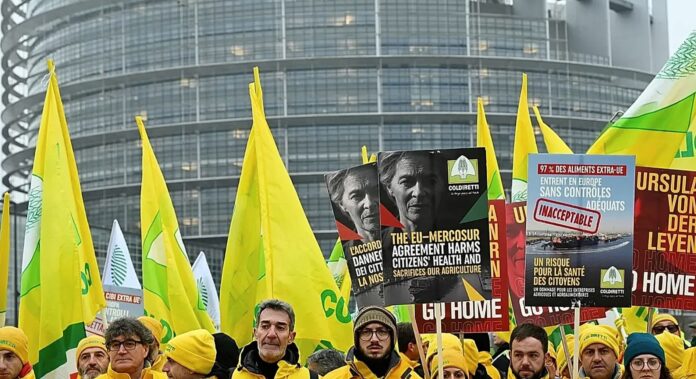
Various agricultural organisations and associations have been focusing for weeks on poultry production, beef, and honey as the sectors most likely to be adversely affected. We analyse the figures set out in the EU-Mercosur agreement and gather the reactions of those concerned
Brussels, 21 January 2026 – The European Parliament has referred the trade agreement with Mercosur to the Court of Justice of the European Union (CJEU). It will now be up to the EU courts to determine whether the text and content of the agreement are legally applicable within EU territory. This decision by the Parliament suspends the processing and implementation of the treaty until the court delivers its ruling, a process that could take up to two years.
That said, the agreement has not been definitively annulled — the European Commission could apply it without waiting for the CJEU’s opinion — and the sectors considered most threatened by it remain concerned about the consequences should it ultimately come into force. We analyse the figures and the potential impact on the most vulnerable sectors.
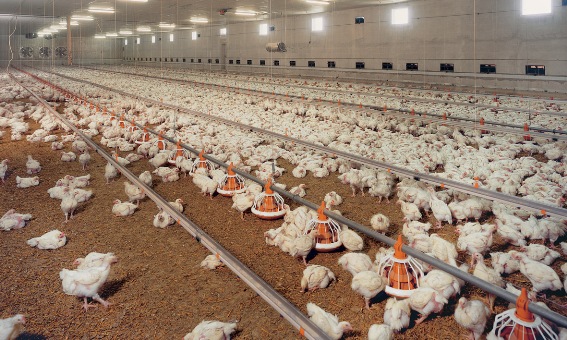
Poultry meat
The poultry meat sector is another that is expressing concern over the effects of the agreement with Mercosur. Jordi Monfort, Secretary of the interprofessional organisation Avianza, states that “the agreement is bad not only for farmers and the companies that form part of the value chain, but also a bad deal for consumers.”
The text of the agreement establishes a quota of 180,000 tonnes of poultry meat that may enter the EU annually. A five-year transitional period is likewise established before that tonnage level is reached. However, unlike beef, no tariff is set. Those 180,000 tonnes are equivalent to 1.35% of poultry consumption in the EU.
The Mercosur agreement stipulates that approximately 6 million chickens per week that are not raised in the EU will enter the EU market. (Jordi Montfort, Secretary of Avianza)
Spain, with a 13% share of total production, is the second-largest poultry meat producer in the EU, behind Poland at 22%. Avianza and its European counterpart AVEC — which together represent 95% of European producers — also point out that “the agreement entails a curtailment of European poultry meat production, unfair competition from non-EU markets, and the entry of products that fail to meet European quality and animal welfare standards.”

Avianza states that the quota allocated to Mercosur equates to 300 million chickens entering the EU annually
Montfort stressed that in Mercosur countries carcass chilling is carried out by water immersion, which adds 7.5% liquid content to the meat. In the EU, chilling is performed solely by air circulation. “In other words, we do not sell water at the price of chicken meat.” Indeed, 25% of the breast meat consumed in Europe comes from third countries using these practices.
The chilling practice used on slaughtered chickens means that a large proportion of those from Mercosur contain 7.5% more moisture. They are selling water at the price of meat
Avianza also notes that “these additional 180,000 tonnes are equivalent to approximately 300 million chickens per year, or around 6 million chickens per week that will not be produced in EU countries.”
European Commission response
In an effort to reassure the most critical sectors, the European Commission has been announcing protective and safeguarding measures for weeks. Commissioner for Health and Animal Welfare, Olivér Várhelyi, has confirmed that “import controls will be strengthened to guarantee food safety and fair competition.”
The commitments expressed by the Commissioner cover the following points:
• Increasing by 50% the number of audits carried out in non-EU countries over the next two years, while maintaining the existing level of controls in member states.
• Increasing audits of European Border Inspection Posts by up to 33%, to verify that member states are conducting border inspections in accordance with EU requirements.
• Developing more rigorous monitoring of products and countries that fail to comply with regulations, increasing the frequency of controls as necessary.
• Providing Commission support to member states carrying out these additional controls.
• Establishing an EU Task Force dedicated to improving the efficiency of import controls, with a particular focus on pesticide residues, food and feed safety, and animal welfare. It will consider coordinated monitoring actions on specific imported products.
• Training approximately 500 national authority officials on official controls, through a dedicated EU programme.
• Updating rules on the importation of products containing traces of particularly hazardous pesticides prohibited in the EU, in line with recently updated international standards.
The agreement eliminates tariffs on EU exports, including key agri-food and industrial products such as automobiles, machinery, and pharmaceuticals, saving European companies €4 billion annually in duties.
The document sets out the objective of maximum access to the Mercosur region for European farmers and food producers, and is expected to increase EU agri-food exports to Mercosur by up to 50%. It also places emphasis on reducing tariffs on key EU products such as wine, spirits, dairy products, and olive oil.
Another commitment contained in the text of the agreement is the protection of 344 EU geographical indications, and their high-value traditional food and beverage production, against unfair competition and imitation. In addition, a fund of €6.3 billion — to be known as the Unity Safety Net — will be created from 2028 onwards, acting as an additional layer of protection for European livestock farmers and producers in the event of market disruptions.
The agreement establishes mechanisms to monitor and protect European producers in the event of market distortions. Furthermore, all imports will be required to comply with EU sanitary and phytosanitary standards, and the agreement does not entail any lowering of those standards.
The European Commission also highlights the sustainability and environmental commitments already embedded in the Paris Agreement, as well as actions for the economic empowerment of women and labour rights. It further underlines the commitment to working towards climate neutrality between now and 2050.